
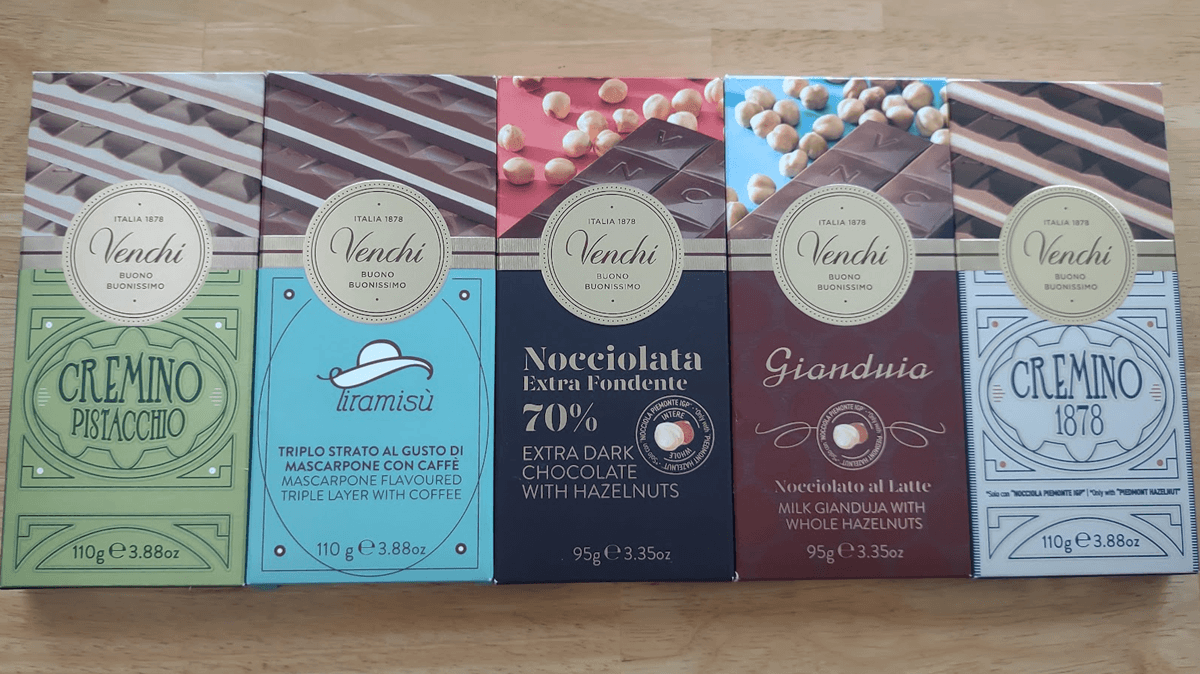
I could hardly contain my excitement when I saw (on the app) that the Grocery Outlet has a bunch of Venchi chocolate bars in stock right now. My absolute favorite kind of chocolate is gianduja – chocolate made with hazelnut paste –and that’s pretty much Venchi’s specialty. Venchi is an Italian chocolate maker and sources all of its hazelnuts from the venerable Piedmont region of Italy (the sweetest hazelnuts you ever laid eyes on, apparently).
A Swiss friend told me that gianduja was developed to make chocolate stretch a bit longer, with hazelnuts being cheaper and more plentiful than cocoa, post-Napoleon. This may not apply today – hazelnuts can be as pricey as cocoa, depending on the quality – but people love it so much that it stuck. Necessity is the mother of invention!
In 1861, after rationing of cocoa during the turbulent years following the Napoleonic wars, the cash-strapped Italian government increased import taxes on certain goods including cocoa beans, threatening the livelihoods of many Italian chocolatiers. – Eataly.

But, either way, I firmly believe that gianduja could be the best use of hazelnuts on the planet – it’s certainly one of the best accompaniments to chocolate. But Venchi also uses local (Italian / Mediterranean) pistachios and almonds too, so I’m excited for all of them.
Review of Venchi chocolate bars
I’m not sure if I’ve ever tried chocolate from this company and I hear it’s pretty good. Venchi chocolate bars normally retail for $10-13 but are on sale at the Grocery Outlet for $4 each.
Sadly, the dark chocolate gianduja bars were sold out in the Grocery Outlet store that I went to. I was hoping to focus on that bar (vegan, dark chocolate) but in its absence I picked up some other bars to review. Always taking one for the team! Here are my thoughts on the bars that I tried so far…

Cremino 1878
This may be Venchi’s flagship chocolate bar, with the 1878 alluding to Venchi’s foundation date. Cremino is a chocolate composed of three layers that originated in the Piedmont region of Italy in the 1800’s. Venchi sticks with tradition by making the two outer layers from gianduja chocolate, and then uses a layer of white chocolate with almond paste in the middle. This chocolate bar is incredibly smooth and soft (don’t carry it around on a hot day!) and a little goes a long way. After all, it’s 39% sugar, 44% fat, and 10% protein. Something to savor rather than devour – this is really delicious. I’m scoring it 4.5/5 for quality and value.
Dark Chocolate hazelnut
This bar is composed of 70% dark chocolate and is considerably lower in sugar (22.6%) than the cremino. Rather than a hazelnut paste it contains whole roasted Piedmont hazelnuts – comprising 25% of the bar. As everyone on Reddit loves to point out, the EU has higher standards than the US when it comes to ingredients in chocolate (and their labeling). Don’t try this after the super-sweet Cremino because it won’t compare well. But eaten alone, this chocolate bar is pretty good. I appreciate that a serving provides 25% of my daily iron needs. Personally, I prefer gianduja so I’ll score it 3.5/5 regular gold stars (I’ll decide on a Green Stars rating for ethics later).
Milk Chocolate Gianduja
Compared to the sold-out dark chocolate gianduja, this milk chocolate gianduja bar has more sugar and less cocoa. On an ethical front, chocolate bars that contain more sugar and less cocoa are actually better in some ways – sugar is easier on the environment than cocoa. Would have preferred a plant-based milk, of course and that’s something I’d like to see from Venchi. This milk chocolate gianduja was very good but I prefer the Cremino 1878. 4/5 gold stars.
Tiramisu
Who doesn’t love tiramisu? I have a feeling that this chocolate might be too sweet for my blood but let’s see… Yes, it’s a bit too sweet for me. I do like the coffee flavor though. 3/5 gold stars.

I also tried the Cremino Pistachio and even though I don’t tend to eat white chocolate, I do like this flavor a lot. Like the Tiramisu, it’s a little sweet for me, but the Cremino Pistachio works better, IMO. 4/5
Venchi: ingredients and nutrition facts
If you didn’t know Venchi has a big reputation you might not be that tempted to pick it up – the packaging is a bit old fashioned and I feel that it undersells the products. Even the ingredients seem undersold, with vanilla listed as “natural vanilla flavor” which makes it sound like a downgrade (more on vanilla in the next section).
Cremino 1878: sugar, cocoa butter, Piedmont hazelnut paste 16.7%, whole milk powder, almond paste 11.1%, cocoa mass, whey powder (from milk), anhydrous milk fat, soy lecithin, natural vanilla flavor.
70% Dark Chocolate hazelnut: cocoa mass, piedmont hazelnut 25.0%, sugar, cocoa butter, soy lecithin, natural vanilla flavor.
Milk Chocolate Gianduja: Sugar, piedmont hazelnut paste, cocoa butter, whole milk powder, cocoa mass, anhydrous milk fat, soy lecithin, natural vanilla flavor.
Dark Chocolate Gianduja: cocoa mass, sugar, Piedmont hazelnut 25.0%, Piedmont hazelnut paste, cocoa butter, soy lecithin, natural vanilla flavor.
Tiramisu: sugar, cocoa butter, cocoa mass, whole milk powder, coffee paste (coffee 62%, cocoa butter), 6.0%, concentrated milk butter, whey powder (from milk), olive oil, soy lecithin, natural flavouring, natural vanilla flavor.
I won’t go into all the nutrition facts, but I’ll show a few examples below. Nutrition-wise, I would go for the dark chocolate bars – less sugar, more beneficial phytochemicals, and a surprisingly good source of iron.

Ethical rating for Venchi chocolates
Here’s a summary of how I feel about the social and environmental impact of Venchi chocolate bars, which I’m scoring 3.5 out of 5 Green Stars.
- Venchi sells a mixture of (vegan) dark chocolate bars and milk chocolate bars. No palm oil is used.
- The company has done a good job with examining its carbon footprint and addressing it. Energy use for manufacturing has been reduced and addressed with solar panels and green energy purchases.
- At the same time, as Venchi acknowledges, most GHG emissions are from Scope 3 – i.e., growing ingredients for the chocolate. The carbon footprint of chocolate can be particularly high (see this seminal paper on food) because of the deforestation that often occurs in areas like West Africa where cacao is grown.
- So, considering the above, the best way for Venchi to continue improving would be to raise the bar (ho ho) on cocoa sourcing. Right now Venchi relies on Rainforest Alliance certification for 80% of its cocoa supply. A couple of decades ago this would have been great. Unfortunately, Rainforest Alliance’s standards have slipped over the years. I looked into peer-reviewed studies on Rainforest Alliance efficacy on the GSP and concluded that it’s not very effective these days at protecting tropical rainforests.
- Don’t get me wrong, I’d much rather buy Venchi chocolate than anything from Nestlé, Mondelez, Hershey, etc. It would just be nice to see Venchi take things further with some organic and/or fair trade certified cocoa, with both considered superior to Rainforest Alliance in terms of impact. Or work with specific cooperatives that look after its farmers and forests. Or work with the Rainforest Alliance to raise their standards, especially the minimum requirements for shade cover.
- Venchi seems to do a good job on sourcing of other ingredients like vanilla and nuts. Vanilla is 80% sourced via the Hakuna Matata project, which supports education, healthcare and orphans in Tanzania.
“We have launched a project in Tanzania, in collaboration with the local NGO Hakuna Matata, dedicated to a vanilla with a floral bouquet and authentic taste, fully traceable from the grower to our production facility. Cultivation respects the environment through integrated agroforestry systems and natural shading, helping to restore soil vitality. The project supports local communities by providing job and training opportunities for women and young people, while involving schools, hospitals, and care facilities to strengthen the region’s sustainability.”
- Hazelnut sourcing is 100% from the Piedmont region of Italy. Almonds and pistachios are also from Italy/ the Mediterranean. Some of the big pistachio growers here in California (e.g., The Wonderful Company) have a reputation of hogging scarce water and forcing smaller competitors out, so I’m happy to support Italian growers.
- Venchi is gradually improving the packaging for its chocolates. Stating, for example, “we are progressively replacing the use of virgin plastic materials with alternatives such as recycled PET or FSC-certified paper from sustainable forests.” However, the bars I bought are wrapped in plastic (and a paper box).
- Overall, Venchi is doing well on many levels and just needs to up the stakes on cocoa souring with fair trade or organic, for example. Because chocolate has an outsized impact on environment (deforestation) and people (poverty, slavery). You won’t find Venchi on the Slavery Free Chocolate list or the GSP list of top 10 ethical chocolate brands. But maybe it has the potential to get there.
- Another thing I’d like to see is the use of plant-based milks instead of regular dairy. Several chocolate makers (e.g., Endangered Species) now make chocolate with vegan milks and you wouldn’t know the difference. Others create a delicious, creamy texture without any milk, like Divine’s dark chocolate with hazelnut truffle.

Summary scores (out of 5) for Venchi chocolate:
- 4 gold stars for quality and value, on average
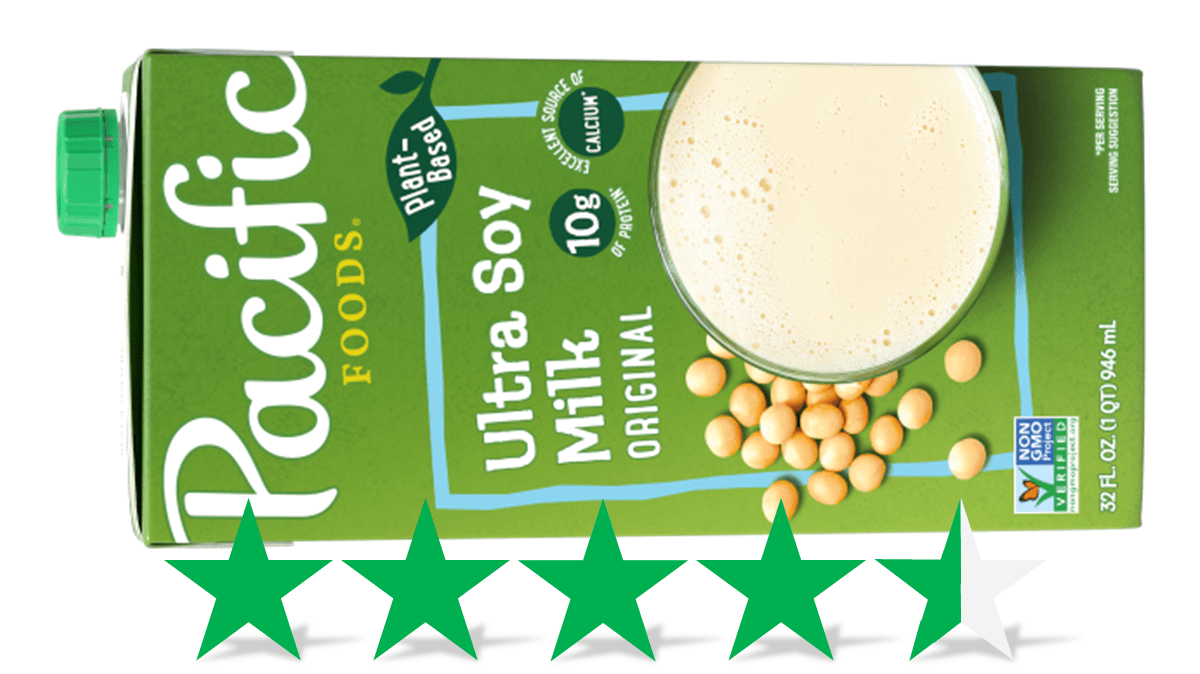
- 3.5 green stars for social and environmental impact, on average
Join the Green Stars Project!
Join the movement to hold corporations accountable (and recognize those with more positive impacts) by including a Green Stars rating when you review a product or business. Also, check out my sister site, The Green Stars Project, for a wider discussion on ethical consumption and social/environmental issues.
Here are a few GSP articles relevant to this post:


Leave a Reply