
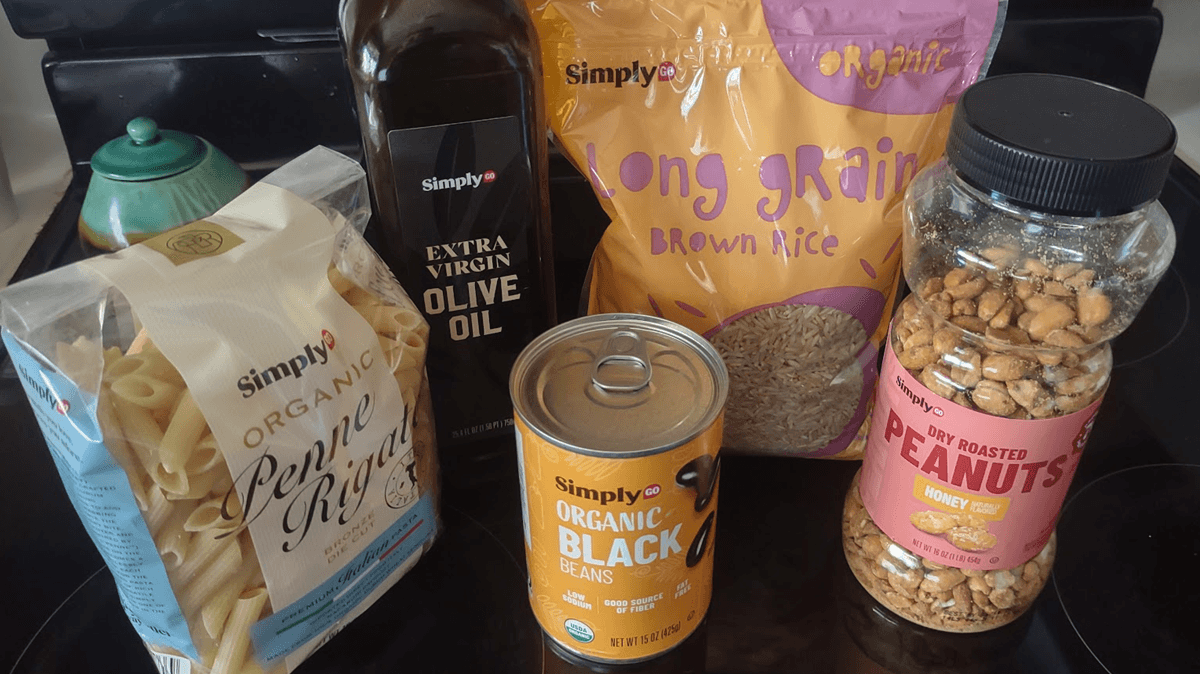
The Grocery Outlet has followed a trend in the steps of many other supermarkets by launching their own private label. The Grocery Outlet’s store brand is called Simply GO and it covers many staples such as rice, beans, pasta, and eggs. I’m generally not a huge fan of private labels as they often mean less transparency to the consumer. Let me explain that very briefly before we move on to an assessment of Simply GO.

Why private labels can be problematic
Let’s say you’re looking to buy some rice. You could buy a product from Lundberg, for example, and get a pretty good idea about the company ethos, if you wanted to. You could learn about environmental practices at Lundberg or aspects such as product safety testing.
But it’s a slightly different story if you’re buying an in-store brand of rice. Private labels are shrouded in mystery by design – it’s central to the business plan. A bag of Simply GO rice might be supplied by Lundberg, for example, but as it’s sold at a lower price the supplier’s identity becomes a trade secret.
I wrote about this in a GSP post on a company that very much relies on that model: Trader Joe’s. Check out that post if you’d like more background on private labels and in-house brands.
However, we can make some judgements based on available information – and that’s just what we’re going to do!
Are Simply GO products good?
There are a couple of ways to interpret this question – are the products a good deal for the consumer and are they are good for the planet and society? I think these two questions are more connected than we think. Certified organic products, for example, are generally better for the planet and better for us too. (See, for example this comparison of organic versus conventional agriculture and recent studies on breast cancer and lung cancer). I mention this example as many of the products in the Simply GO range are actually organic.
Affordable organic
I searched products at local Grocery Outlets using the app using search terms “Simply GO” and “Simply GO org” and it turns out that around one third of applicable Simply GO food products are certified organic!
Now it might be normal to think, oh well, these big private labels are just going to be encouraging “Big Organic.” (Don’t get me started, Pollan!) Our most critical social and environmental problems hinge on our ability to make sustainable (and nutritious) food affordable to everyone, and that takes a certain level of efficiency.
Our biggest problems, in a nutshell, can be solved by persuading Americans (and everyone) to pick up a few cans of organic beans and chickpeas instead of beef. The image that persuaded me to investigate the Simply GO products (I’m not affiliated) was the sight of big stacks of Simply GO organic beans and chickpeas for $1.19. Organic legumes (any legumes) are basically top of the list when it comes to ethical proteins.

As mentioned above, in-store brands can suffer from a lack of transparency. The best way around this is to look for third-party certifications – whether or not we know who made the product, a certification is one of the best forms of ethical assurance. I checked the GO paper towels and toilet paper (bath tissue!) and saw that they’re certified by the Sustainable Forestry Institute – this is not as good as the Forest Stewardship Council (or recycled) but better than no certification. I didn’t see any fair trade certifications, although fair trade would only apply to a small number of Simply GO items. So the abundance of certified organic products is the biggest news.
Review of the Simply GO range
Honestly, I wasn’t expecting these products to be that good. Or at least half of me wasn’t. The in-store brands that I was exposed to as a kid had a pretty poor reputation. However, private-label products from places like Trader Joe’s have changed people’s attitudes towards this concept – especially after it was leaked that certain Trader Joe’s products are actually made by companies that customers love and trust.
I’ve tried several Simply GO products over the last year and have actually been pretty happy with them. Some of them are definite repeat buys. Here are some brief thoughts on individual products.
Simply GO organic beans and chickpeas
The Simply GO canned organic beans (pinto and black) and garbanzo beans (aka chickpeas) are prominently displayed in stores. This is a good thing because, honestly, I totally got out of the habit of buying canned beans or chickpeas. I aim to use the dried legumes that are perennially in stock at home but too often don’t have time. Canned chickpeas and beans are a great resource, because the only good legume is the one you actually eat! You’ll probably find them in the NOSH section of your local Grocery Outlet – NOSH stands for Natural, Organic, Specialty, and Healthy.
I’ve used all of these canned products in cooking projects that required aquafaba – the liquid left over from cooking beans and chickpeas. I’ll use the aquafaba for one recipe and then use the chickpeas and beans in anything from Middle Eastern dishes to nachos. I’ve been happy with both the quality of the beans (in a dish like nachos it’s pretty obvious if they aren’t good) and also with the ability of the aquafaba from these products to form stable foams and emulsions.
Simply GO organic pasta
The Simply GO organic pasta is bronze-cut pasta that comes in a variety of shapes, from spaghetti and penne to gemelli (hmm?) and lumaca rigata (whaaa..!?). A friend suggested that the pasta may be made by Garofolo, based on similarities to pasta on sale in Costco and other stores. Who knows? A general opinion online is that the Simply GO organic pasta is better than the non-organic Simply GO pasta. The organic pasta costs 50% more, but it’s not a huge amount in dollar terms – $1.79 versus $1.19 per lb.

I tried the penne with really simple accompaniments – Simply GO organic olive oil, some dry-farmed tomatoes that are available right now, and salt – that’s it! Honestly, it was probably the best meal I’d had all week (dry-farmed tomatoes are incredible). I deliberately made it simple so that there was no place for bad pasta to hide, and indeed the pasta had really good texture and flavor, even with just EVOO and salt.
Looking at the social and environmental impact, organic pasta is a better choice than conventional. I wouldn’t say regular pasta is hugely problematic – it’s a low-footprint food, either way. But when we compare organic and conventional wheat, a key difference is the amount of nitrogen fertilizer run off, which creates aquatic dead zones. Nitrogen runoff is reduced in organic agriculture systems.
Simply GO organic EVOO
I mentioned the olive oil above (served on pasta) so I won’t say too much here except that it’s subtle. It seems like a good olive oil to use for cooking or whenever you don’t want to be overwhelmed by green olive flavors. And it’s $10 for a 750 mL of organic olive oil in a glass bottle. Who do I feel like I’m writing copy for the Trader Joe’s flyer right now? Let me get back on track…
A recent GSP post looked at the environmental and health impacts of oils, and why a canola/olive blend may be ideal. Canola oil beats olive oil on several sustainability metrics (e.g., water use) and also brings the health benefit of higher omega-3 content. Regular canola oil is cheap but organic always seems to be a lot more expensive. So here’s a request to the Grocery Outlet: Simply GO organic canola oil, please – preferably in a glass bottle!
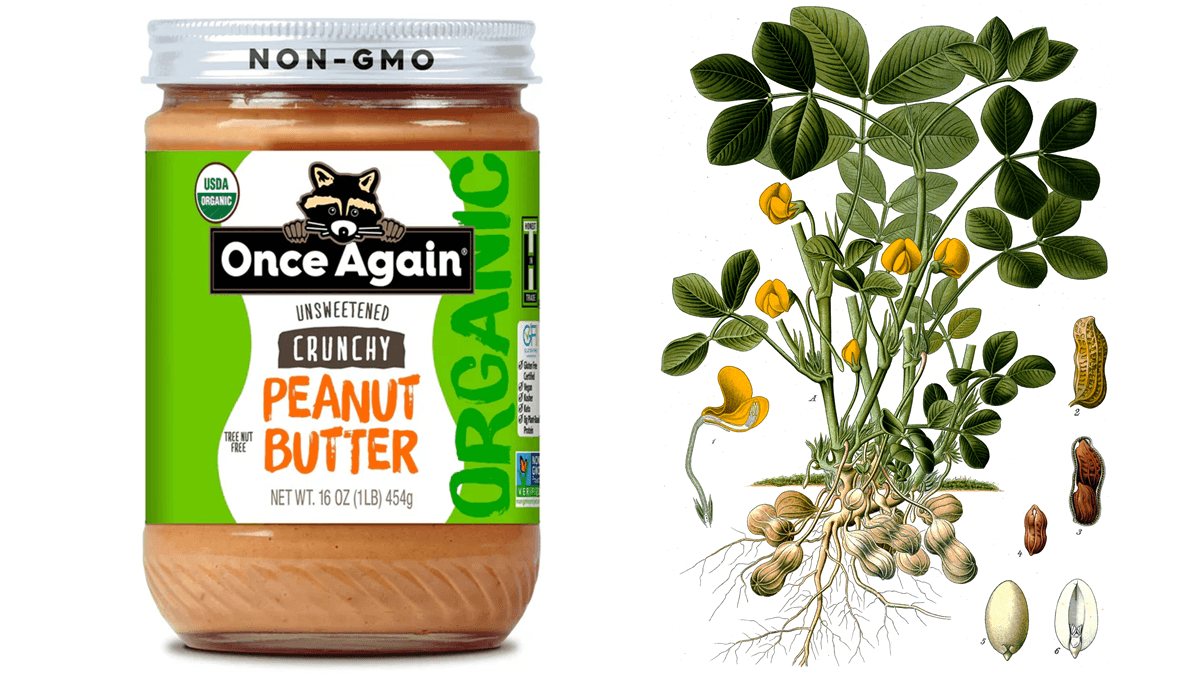
Also, see my recent post on Once Again peanut butter for a discussion on why I prefer items packaged in glass over plastic. For cooking oils in particular, storing in plastic bottles just feels wrong to me.
Pasture-raised eggs
I may cover the Simply GO pasture-raised eggs in a separate post as they’re a bit more complicated. The term “pasture-raised” hasn’t yet been regulated in the US, although there have been attempts to do so. The USDA guidelines are to seek out certified producers – Certified Humane Pasture Raised, for example.
The Simply GO pasture-raised eggs are not certified, alas. Or perhaps the certification is not shown on the packaging to keep the identity secret? I get Vital Farms vibes from the packaging but Grocery Outlet would not reveal the supplier’s identity when I asked about certifications.
The Green Stars Project just launched a new Ethical Guide, and the first post is on eggs, so check that out if you’d like to know more on that topic. I believe eggs are among the most ethical animal products, so for vegetarians and omnivores looking to reducing their environmental footprints, choose eggs over cheese.
Simply GO Organic Brown Rice
I just tried the Simply GO organic brown rice and really liked it. I like to try different kinds of rice and this one produced nice dry rice, when cooked, a little nutty with well-separated grains. It was flavorsome, and went well with saucy dishes like curry, but also made very good fried rice the next day.
In summary, I was happy with the Simply GO products that I tried – most of the above will be regular rebuys. More than anything, I’m happy that the beans and chickpeas are good and actually being marketed a bit (think of the marketing budgets for meat, dairy, and fast food). Simple as it sounds, an abundance of low-cost, good-quality legumes, prominently displayed in American supermarkets could be the thing that saves us.
Join the Green Stars Project!
Join the movement to hold corporations accountable (and recognize those with more positive impacts) by including a Green Stars rating when you review a product or business. Also, check out my sister site, The Green Stars Project, for a wider discussion on ethical consumption and social/environmental issues.
Here are a few GSP articles relevant to this post:
Leave a Reply