
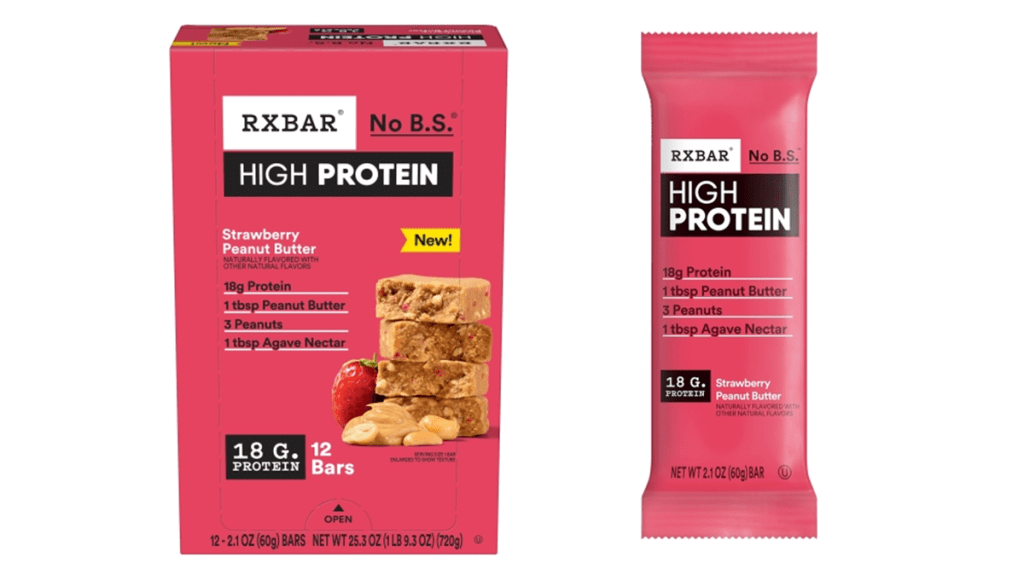
I found a box of vegan protein bars from RxBar at the Grocery Outlet and decided to try them out. Actually there was no price listed and, at the checkout, when I found out that they were $12.99 (for a box of 12) I almost didn’t buy them. It’s a significant investment considering that the majority of protein bars are not great and those with very high protein content often verge on the inedible. But a friend had once recommended Rx Bars as one of the better energy bars so I took the plunge – in the name of science!
RxBar was founded by Peter Rahal, who sold the company to Kellogg’s about a decade ago and went on to start a new company, David Protein, making high-end bars tailored for high-protein diets.
In 2013, while food corporations were pouring millions into marketing campaigns, Peter Rahal was in his parents’ basement with just $10,000, three ingredients, and an insight that would disrupt a billion-dollar industry. Just four years later, he sold RxBar to Kellogg’s for $600 million. – Forbes.
Plant-based RxBar: a big improvement
The reason it took me so long to try RxBars was that they derive most of their protein from egg whites. Not pasture-raised eggs but more like commodity market egg white powder. Having looked at the environmental impacts of various protein-rich foods, I consider eggs to be one of the better animal-based options. But there are other impacts – animal welfare and threat to humanity (bird flu) – where intensively-farmed eggs fall short, compared to pasture-raised.
Besides, there are many potential protein sources for an energy bar, so why support industrially-farmed animal ingredients? If our bodies are our temples, why feed them with food produced under unhappy conditions?
So I was excited to see that RxBar had launched a couple of vegan products, while also increasing protein content. Each little 60 gram bar contains an impressive 18 grams of protein. What most impressed me was how I felt after eating one. I tried my first one in a state of depleted energy and felt noticeably more human again almost immediately. It did a better job of replacing a meal and abating my hunger than most other bars I’ve tried.
The taste and texture is quite simple – similar to what you’d expect if you combined strawberries, peanuts, and pea protein, with some agave added for sweetener. I prefer this simple kind of bar to one that attempts to emulate a Snickers. I’m now glad I bought a box of 12 bars (for less than half the normal price) and will probably buy some more on my next Grocery Outlet visit.
RxBar, high protein strawberry peanut butter bar – ingredients and nutrition facts
I’m not a gym bro but I do like the idea of getting a reasonable amount protein in my largely plant-based diet. And these 60 gram bars contain 18 grams of protein that comes from a mixture of peanuts and pea protein.
Ingredients: Peanut butter (peanuts), agave nectar, pea protein, peanuts, strawberries, natural flavors
Looking at the nutrition profile (pictured below), each bar contains 12 grams fat (2 g saturated), 16 g sugars, 4 g fiber, and 18 g protein. I don’t love products with a significant amount of added sugar but in this case it’s balanced with fat, protein and fiber. For a protein bar that I would take hiking or to carry as an emergency meal replacement, it makes sense that it includes both carbs and fat to balance the protein.
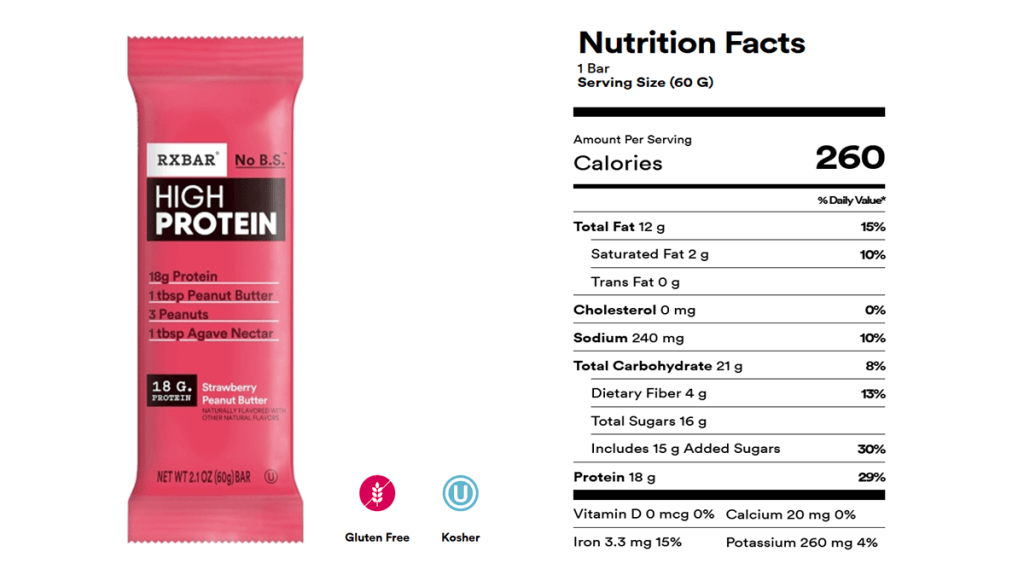
As a vegetarian, I appreciate that it also provides 15% of my recommended iron intake.
Ethical rating for RxBar’s vegan range
I’m rating RxBar’s new plant-based high-protein bars 4/5 Green Stars for social and environmental impact, based on the following:
- RxBar recently launched this vegan product range, providing an alternative to the regular bars that are made with egg white powder. This is a positive step forward for the company.
- Adopting a plant-based diet is the top thing you can do to mitigate climate change, food scarcity, animal cruelty, deforestation, and other major environmental threats.
- The main ingredients, although not organic, are among the foods with the lowest environmental footprints. Pea protein, in particular, is one of the most sustainable protein sources on the planer. Peanuts, like peas, are also actually legumes and have lower footprints than tree nuts. Shelf-stable nutrient-dense foods made from sustainable ingredients like these are among the best kinds of processed foods.
- RxBar doesn’t provide a ton of information on sustainability. The company is working towards a LEED (green building) certification and doesn’t use GMO ingredients.
- I covered Rxbar’s parent company, Kellogg’s (now called Kellanova and owned by Mars, Inc.) in a post on Morningstar products, so I’ll refer you to that post for more background on the company. Bottom line, it’s slightly above average in terms of ethics, a far as large multinational food corporations go (better than Nestlé, Mondelēz, Hershey, and Unilever, but not as good as mission-driven food companies).
- Bars come in plastic wrap and are packaged in a cardboard box that’s recyclable but not FSC-certified.
- The original RxBars, made with powered egg white from intensive farms, would receive a lower Green Stars rating. Choosing a plant-based RxBar nudges the brand in a better direction.
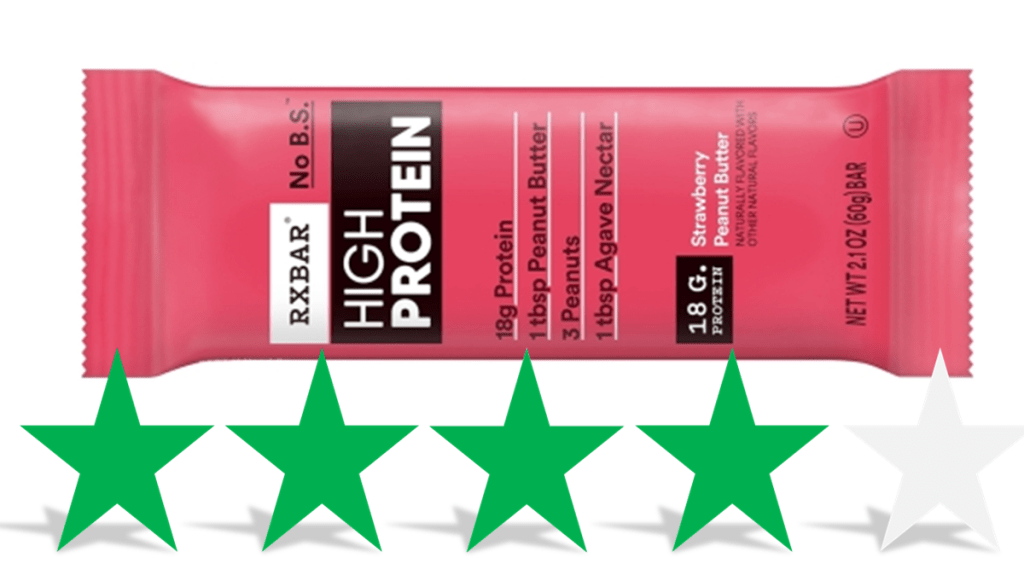
Summary scores (out of 5) for RxBar’s vegan range:
- 4 gold stars for quality and value.
- 4 Green Stars for social and environmental impact.
What do you think? Comment below with your rating if you like!
Join the Green Stars Project!
Join the movement to hold corporations accountable (and recognize those with more positive impacts) by including a Green Stars rating when you review a product or business.
Check out sister site The Green Stars Project for a wider discussion on ethical consumption and social/environmental issues. Here are few articles relevant to butter:
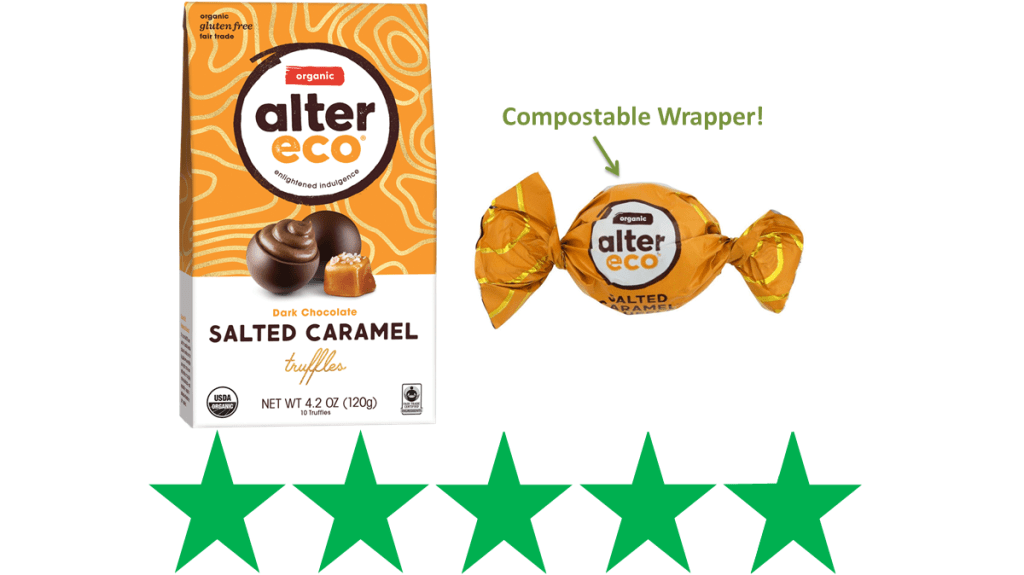

 Grocery Outlet Ethical Bargains
Leave a comment