
I’ve been vegetarian a long time and am happy to eat plant-based dairy, for the most part. But if I’m going to buy an animal-based food then butter is high on my list (along with eggs). In this case, I was also curious about the claims that Ivy’s butter (made by Wyke Farms in the UK) is carbon-neutral.
As far as dairy products go, I’ve almost no incentive to buy dairy milk now as I find plant-based milks to be perfectly fine. Similarly, there are several plant-based butters that I really like – Miyoko’s, Naturli’, and Violife, to name three. All of them are free of palm oil and rate well ethically, in my opinion. So, if I’m going to buy regular butter it has to be worth it!
Most dairy-based butters come from cows raised mainly in indoor feedlots and have been surpassed by the better plant-based butters. The lack of fresh grass in a cow’s diet is not just bad news for the cow – it also results in butter that’s not worth buying. Ivy’s Reserve salted butter is clearly tastier than standard dairy butter, and many agree. However, compared to my personal favorite, Kerrygold, I think Ivy’s takes second place in two respects: it doesn’t melt as easily and it’s paler.
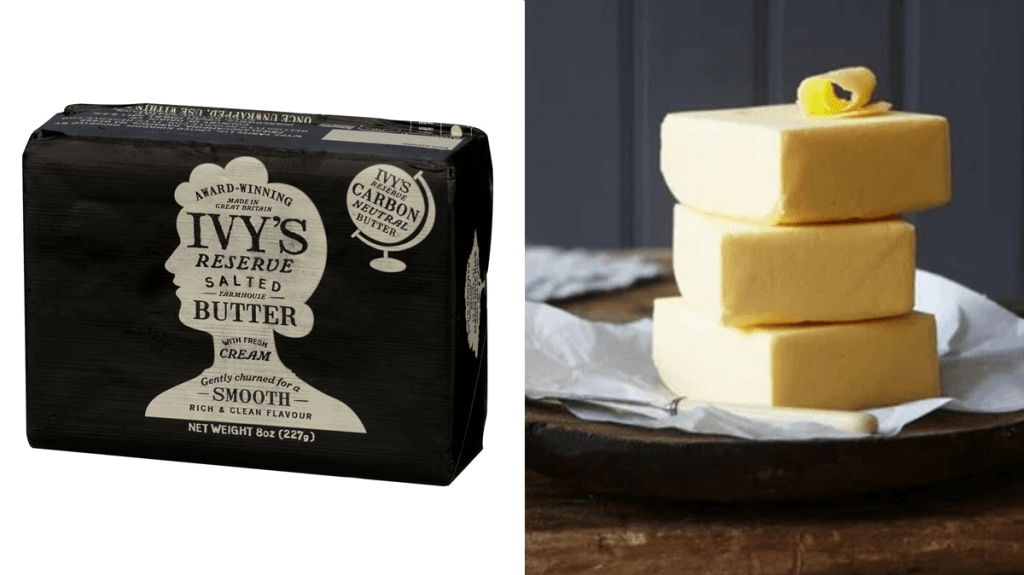
Having said that, Ivy’s melts fairly well and, more importantly, it has a great flavor. Butter should taste amazing on its own (on toast or a cracker) and should be distinctive enough to elevate other ingredients. Even mediocre plant-based cheese becomes pretty good when paired with a little pasture-raised butter. That’s my Tip of the Day for anyone gradually transitioning to plant-based dairy 😉
Ivy’s Reserve does elevate avocado toast and mediocre plant-based cheese for me. I just wish it was a bit more buttery-yellow as this color correlates with cows that spend more time grazing on fresh grass.
What’s the yellow color in butter from?
Grass-fed butters such as Kerrygold, have a rich yellow color that comes from beta-carotene in the grass that the cows graze on. The yellow color can also be created artificially by adding pigmented ingredients such as annatto, so watch out for that in ingredient lists. Besides the higher beta-carotene content, grass-fed butters are widely considered to be nutritionally superior to butter from cows raised in feedlots.
So, if you ever do buy dairy butter, seek out products that are labeled grass-fed or pasture-raised and have a golden hue. They are better for you nutritionally, and more humane for the cows.
Ivy’s Reserve butter – ingredients
Ingredients: Butter (Milk), Salt 2%
Ivy’s reserve butter contains much more salt (2%) compared to Kerrygold (0.7%), which is surprising to me as it doesn’t taste all that salty. A tablespoon (14 gram) serving provides 5% of your recommended sodium daily intake. Not a big deal, unless you’re on a low-sodium diet and plan to eat a lot of butter 🙂
The “nutrition facts” panel isn’t very helpful for products like butter. You don’t get a sense of the benefits of grass-fed butter over regular butter. On that topic, it’s not clear to me how many of the 130 dairy farms that supply Wyke Farms are pasture-based versus feedlot-based.
How is Ivy’s Reserve carbon neutral?
In spring 2023, Wyke Farms announced the release of Ivy’s Reserve carbon neutral butter – a UK first. The previous year, Wyke had released Ivy’s Reserve Vintage Cheddar announcing it to be “the world’s first carbon neutral cheddar.”
I was curious to know how this butter came to be certified carbon neutral – is it from changes in farming methods, the use of renewable energy, and/or carbon offsetting?
The most detail that I can find is in this press release. Wyks Farms lists five ways in which the cheese and butter have become carbon neutral. Here’s a quick summary of them:
Farming: A sustainability plan covering animal feed, land management, energy use, regenerative farming, and soil health has reduced the CO2 footprint of Wyke’s milk by 20%, compared to the national average.*
Production: Waste and packaging minimization; heat recovery; wastewater reuse.
Green Energy: Ivy’s products are made using 100% green energy, supplied by onsite solar and biogas. The biogas comes from an anaerobic digester fed with farm and dairy waste, avoiding 20 million kg of CO2 emissions every year and providing a natural fertilizer that’s used on local farms.
Conservation: Rewilding of uncultivated areas; tree-planting; bird and insect conservation.
Offsetting: Some of the carbon footprint of Ivy’s products is offset by Wyke through support of two projects with ClimateCare. The company acknowledged that “this is only a temporary solution, and actively seek out all other routes to Net Positivity.”
*1.12 kg CO2 /kg milk, compared to the UK average of 1.55 kg CO2 /kg.
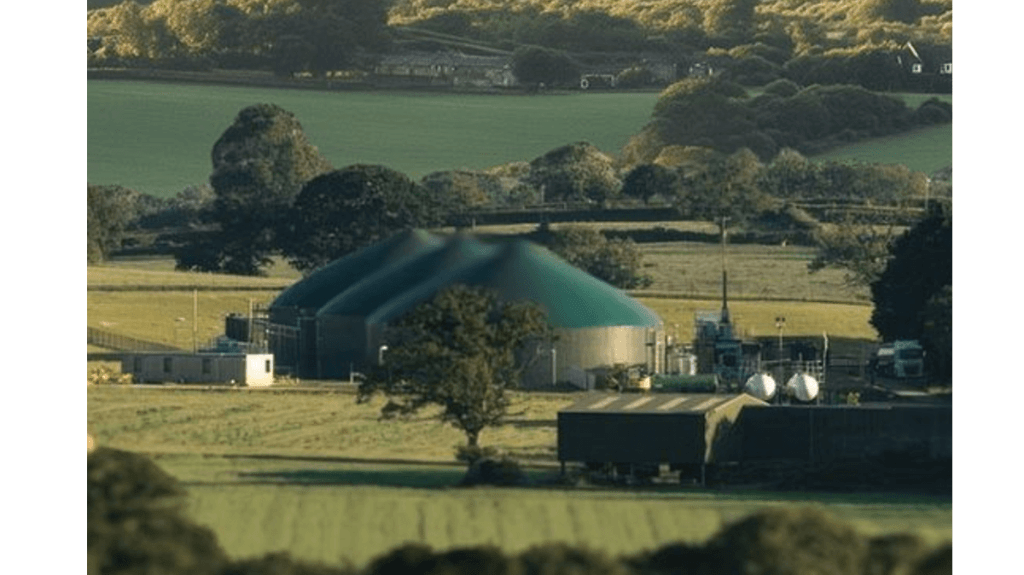
Unfortunately, neither Wyke Farms nor the Carbon Trust provides further detail the breakdown of GHG emissions. I don’t know how much of the total reduction in Ivy’s carbon footprint is due to offsetting, for example. This is a shame as it could have been provided as a template for others to follow.
Ethical rating for Ivy’s Reserve butter
This rating will be in the context of butters in general – both dairy-based and plant-based. The carbon footprint of dairy products is a big aspect of their environmental impact, but their land and water footprints are especially large too. Then, of course, there’s the animal welfare aspect of in the dairy industry. Personally, animal welfare is a major motivation for avoiding dairy. Choosing pasture-raised, organic butter helps in this respect but doesn’t cover all the impacts (especially the fate of calves).
There are too many details to cover here, but when we consider the spectrum of butter, it’s hard for an animal-based butter to rate higher than average (2.5 Green Stars) for social and environmental impact. Most plant-based butters rate higher than average, with the exception of those made from irresponsibly-sourced palm oil (which includes too many products, unfortunately).
Products that raise the bar on sustainability, especially in high-impact industries like dairy, do deserve a bonus on their Green Stars rating, I believe. Has Wyke Farms raised the bar in dairy with Ivy’s Reserve? More detail on Ivy’s carbon neutrality would have helped seal the deal there. The company has done a good job at marketing this but isn’t totally transparent on accounting, and that’s particularly important as the carbon-neutrality only applies to a couple of Wyke’s flagship products.
Wyke’s has raised the bar in other ways, such as water and biodiversity conservation but there are downsides to Ivy’s Reserve butter. It’s not labeled as a grass-fed or pasture-raised product, nor is it certified organic. Some supply farms are probably pasture-based but Wyke provides no figures on this.
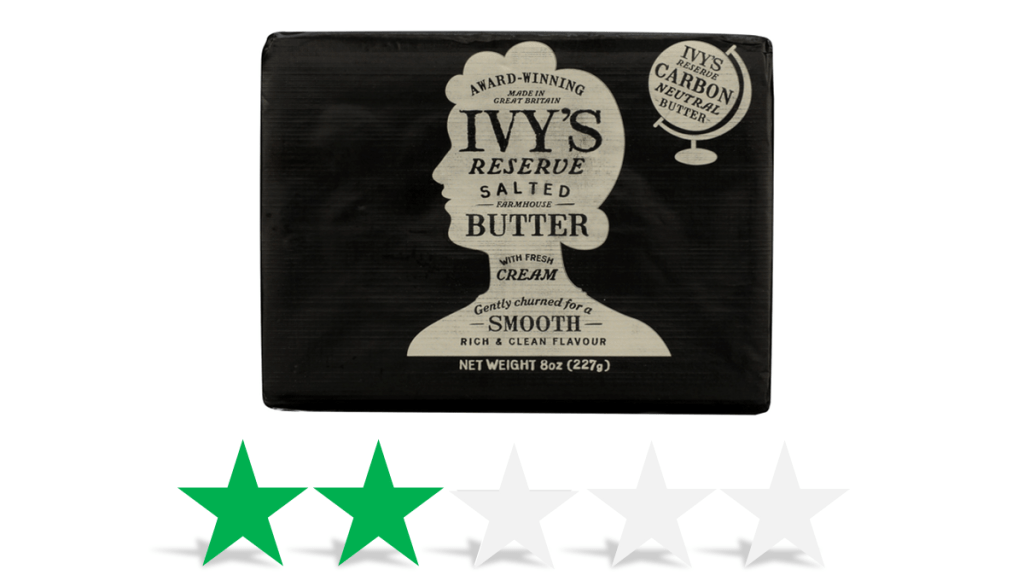
I think that a rating of 2 out of 5 Green Stars is appropriate in this case. Do you think this is a fair rating?
Bear in mind that most butter products made from feedlot-raised cows would get a rating between 0 and 1 Green Star. I’m not even sure how beloved Kerrygold would rate ethically – maybe better than Ivy’s in some respects (cows are pasture raised) and worse in others (climate, corporate social responsibility). A topic for another post!
Summary scores (out of 5) for Ivy’s Reserve butter:
- 4 gold stars for quality and value.
- 2 Green Stars for social and environmental impact.
What do you think? Comment below with your rating if you like!
Join the Green Stars Project!
Join the movement to hold corporations accountable (and recognize those with more positive impacts) by including a Green Stars rating when you review a product or business.
Check out sister site The Green Stars Project for a wider discussion on ethical consumption and social/environmental issues. Here are few articles relevant to butter:
 Grocery Outlet Ethical Bargains
Leave a comment