
Another exciting find at the Grocery Outlet – Tofurky tofu for $1! This just coincides perfectly with my plan to eat a bit more protein this year. No, this is not inspired by any ridiculous new food pyramids – it’s largely to adjust for becoming a bit more vegan over the last few years. If I’m no longer stocking cheese in my fridge then I should replace it with another high-protein product.*
*I’ve actually spent a lot of time researching the health impact of carb and protein content in our diets, so check out that post if interested. Getting around half your calories from carbs is ideal for health, in general.
Review of Tofurky’s Japanese-style tofu
My tips for people who aren’t sold on tofu are to find a good brand and try soft tofu. I used to always buy dense tofu bricks, thinking that they would have a meatier texture. The problem there is that, if it’s not well-made, dense tofu can have a musty flavor and won’t be that meaty, either.
There are exceptions, however, and I do buy extra-firm tofu like Wildwood, which provides 9 g protein per 85 g (3 oz.) serving. I usually cook high-protein tofu by tossing in a mix of flour/yeast extract/spices and then pan-frying until golden.
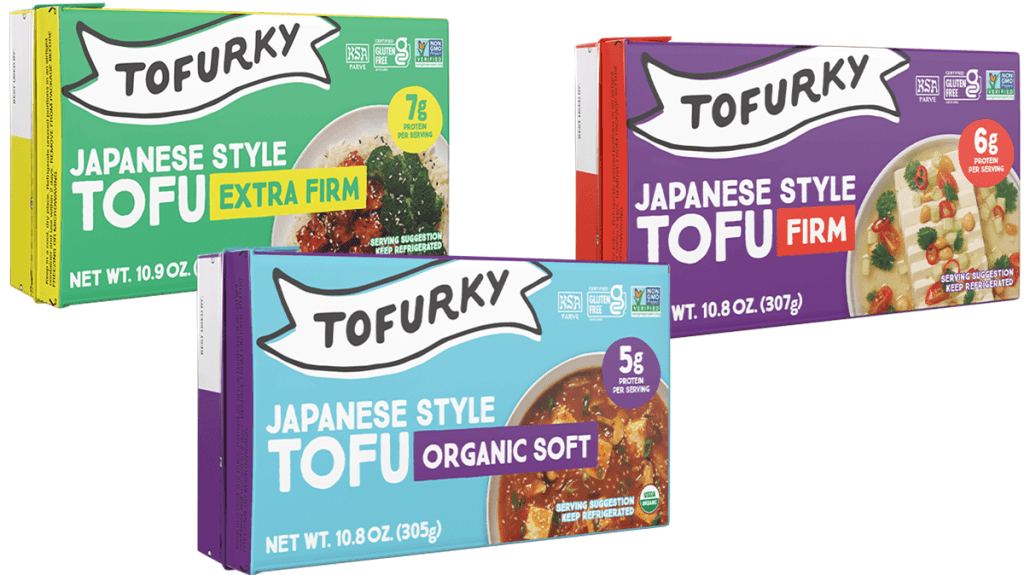
Crispy pan-fried tofu will people over, for sure, but when cooking other kinds of dishes – stews, Japanese hotpots, and even stir-fries – I recommend trying a softer tofu. The Tofurky tofu comes in three varieties – soft, firm, and extra firm – but surprisingly they are all fairly soft. You can tell from their protein content – 5, 6, and 7 grams protein per 85 g (3 oz.) serving, respectively – that they don’t differ all that much in terms of firmness.
They all have good flavor and a silken texture but I’ll probably pick the soft tofu in future. I hadn’t noticed at first, but it’s the only one of the three that’s certified organic.
Tofurky acquired by Morinaga
The story of Tofurky goes back 45 years when Seth Tibbott became vegetarian in college and then founded Turtle Island Foods in 1980’s Oregon. Tibbott began by selling homemade tempeh and then moved on to making soy-based “Tofurky” holiday roasts and deli slices.
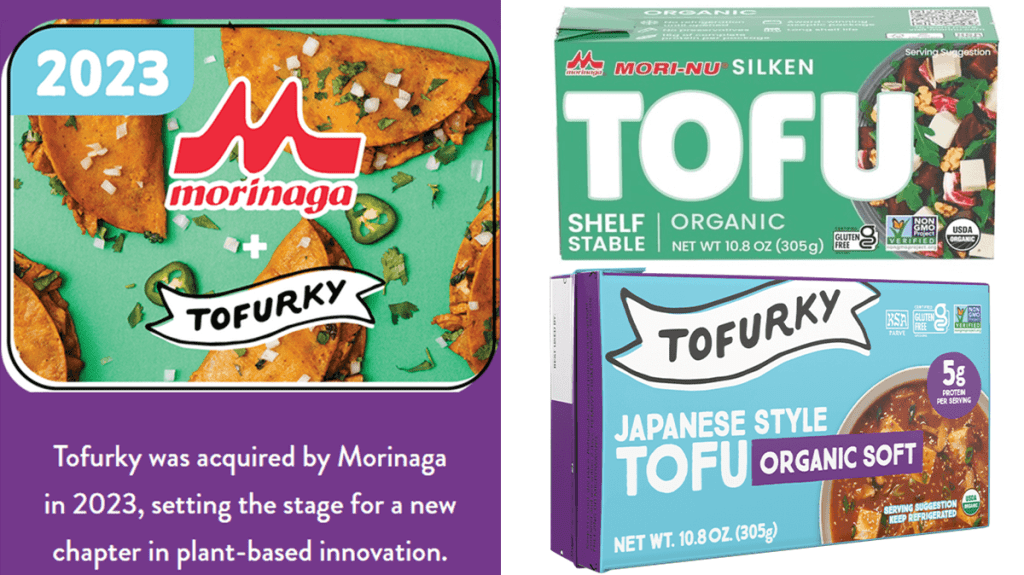
In 2023, Tofurky was acquired by Japanese food company, Morinaga, which also sells tofu under its own brand, Mori-Nu. This wasn’t out of the blue – according to AgFunderNews, Morinaga has been a longstanding partner of Tofurky, supplying it with tofu for 17 years. Supply chain issues (Covid/Ukraine) brought economic challenges to Tofurky and joining forces made sense.
Tofurky tofu – ingredients and nutrition facts
Tofu is made by a process similar to that of cheesemaking – boiling soy milk and then coagulating the protein. So the ingredients are usually pretty simple, as you can see below.
- Organic soft tofu: Water, organic soybeans, glucono-delta-lactone, calcium chloride.
- Firm tofu: Water, soybeans, soy protein isolate, glucono-delta-lactone, calcium chloride.
- Extra firm tofu: Water, soybeans, soy protein isolate, glucono-delta-lactone, calcium chloride.
Soy protein isolate is a bit unusual in tofu – it’s in the firm and extra firm but not the organic soft tofu. Glucono-Delta-Lactone – “a non-dairy coagulant derived from non-GMO corn starch” – sounds unusual but is actually a fairly normal ingredient that’s also used in cheesemaking:
Glucono delta-lactone (GDL) is a naturally occurring organic acid also used in cheesemaking, this coagulant produces a very fine textured tofu that is almost jelly-like. It is used especially for “silken” and softer tofus and confers a faint sour taste to the finished product. – Wikipedia
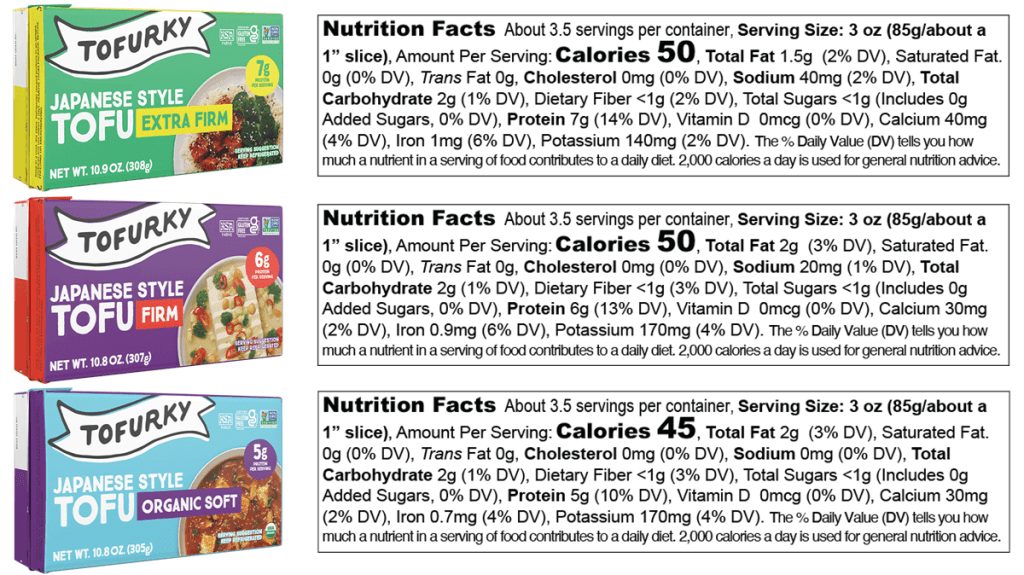
The nutrition facts are, as you can expect, fairly similar. The soft, firm, and extra-firm varities provide 5, 6, and 7 grams of protein per serving, respectively. They are all very low in sodium and carbs (the organic soft tofu has zero sodium) while providing 2-3% of our daily fiber needs and 4-6% of our iron. Personally, I’ll eat at least two servings per meal, so double all of that 🙂
Note that ingredients and nutrition facts for the Tofurky organic soft tofu are identical to those of Morinaga’s Mori-Nu organic silken tofu. the only difference is that Mori-Nu’s package is aseptic (shelf-stable) while Tofurky’s tofu should be refrigerated.
I like the nutritional profile of a high-density tofu that’s made using only calcium or magnesium salts, like Wildwood or Hodu extra firm (which provides 14 g protein, 15% iron, 20% calcium per 3 oz. serving). But I also like soft tofu!
Ethical rating for Tofurky tofu
I previously profiled Tofurky on the Green Stars Project, rating it 5/5 Green Stars for social and environmental impact. Here’s how I summarized my rating for Tofurky back then (2019):
- Vegan product.
- The water, land, and greenhouse gas footprints for tofu and gluten are much lower than those for meat.
- Made with organic soybeans sourced from North America.
- Independent company that’s certified by B-Corp.
- Their main production facility was constructed to LEED Platinum standards.
- Some of their energy is generated by on-site solar.
- Packaging is recycled cardboard and minimal plastic.
- They support local animal-rescue and environmental groups.
How much of this is still valid?
Tofurky’s products are all still vegan and the environmental benefits of tofu over meat are still valid (actually the arguments are even stronger now). Tofurky appears to be still made from soybeans sourced from North America (according to both Cornucopia and Tofurky’s new owner, Morinaga). Tofurky is no longer certified by B-Corp, which is a shame. The website no longer contains detail on energy efficiency or supporting animal rescue and environmental groups. The production facility hasn’t changed so presumably it’s still energy-efficient – Tofurky is just not communicating on this anymore.
It’s often disappointing when a small, independent company is taken over by a larger corporation and transparency disappears. The detail on Tofurky’s impact disappeared from its website after the takeover, and a search for Tofurky on Morinaga’s websites yields nothing. This happens a lot (e.g., Spectrum Organics) and it’s frustrating. Consumers value the ethics of brands like Tofurky, so why hide all of that, post-takeover?
Taking a wider view, tofu is so much better for the planet than meat that the majority of tofu brands will score significantly above average (i.e., > 2.5 Green Stars). Of course, we can rank tofu brands from best to worst, but they should be scored in the context of how they compare to other protein-rich foods.
In a GSP post on tofu, I covered the two main things to look for: type of agriculture and country of origin.
Soybeans or tofu that are sustainably grown (e.g., certified organic) and do not contribute to deforestation (i.e., know the origin) should generally get 5/5 green stars. – Daily Footprint, #34 – tofu.
So considering all of the above, I think that Tofurky’s organic tofu deserves 5/5 Green Stars for social and environmental impact while the other two (non-organic but made from non-GMO soy grown in North-America) deserve 4/5 Green Stars. That’s it for now – I’ll update if new information comes in.
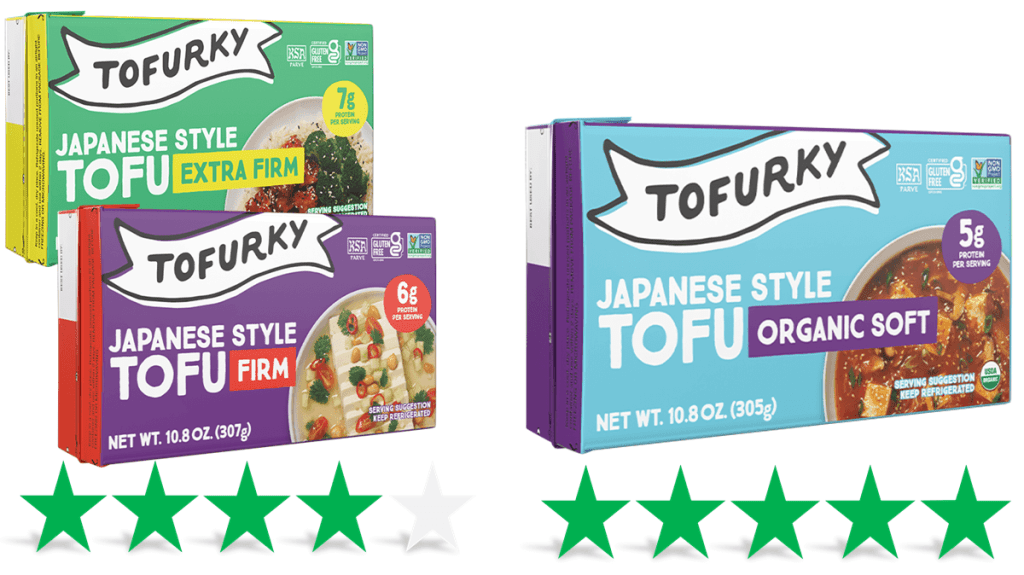
Summary scores (out of 5) for Tofurky’s tofu:
- 4.5 gold stars for quality and value (especially at $1!)
- 5 Green Stars for social and environmental impact for the organic tofu and 4 Green Stars for the other two.
What do you think? Comment below with your rating if you like!
Join the Green Stars Project!
Join the GSP movement: Hold corporations accountable (and recognize those with more positive impacts) by including a Green Stars rating when you review a product or business.
Check out sister site The Green Stars Project for a wider discussion on ethical consumption and social/environmental issues. Here are few articles relevant to Tofurky and tofu:

 Grocery Outlet Ethical Bargains
Leave a comment