
I recently picked up two vegan hazelnut chocolate bars at the Grocery Outlet – one from Lindt (Lindt & Sprungli) and one from Divine Chocolate (co-owned by Ghanaian cocoa farmers). I figured, why not do a hazelnut-chocolate taste-off and ethical comparison.
I already knew that these two chocolate makers are very different in terms of ethics but I wasn’t expecting such a difference in terms of enjoyment. I normally only feature products that I believe are better than average, in terms of ethics (i.e., scoring > 2.5 Green Stars for social and environmental impact). In this case I’ll feature one product that I recommend and one that I don’t.
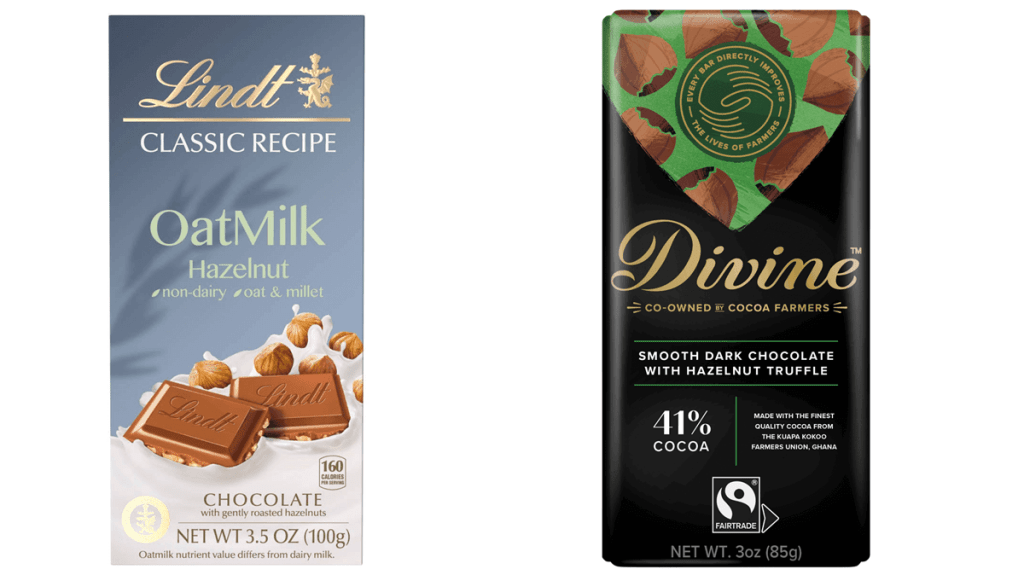
Which tastes better: Divine or Lindt?
I was compelled to write this post because there’s a world of difference between these chocolate bars. How can I summarize this? I much, much preferred the Divine chocolate and would be surprised if most people didn’t agree. I actually expected the Lindt to taste better but Divine blew it away.
The funny thing is that the Lindt chocolate didn’t seem terrible – it came across as alright, in a nondescript kind of way. It’s only when I tried it after the Divine bar that I realized how lame the Lindt bar is. When I compared the two of them, alternating them and even tasting blind, I concluded that the Divine bar is miles ahead in terms of delivering chocolate flavor, hazelnut flavor, balanced sweetness, and an enjoyable, creamy texture.
The Lindt bar doesn’t even taste very much like chocolate, and this is something I’ve noticed with many of the big-name chocolate makers. So how do companies like Lindt stay in business?
Advertising! (The secret of Lindt’s success)
When I was about to taste the two chocolate bars, why did I think the Lindt bar was going to be the better of the two? Have I been conditioned by all those Lindt ads featuring a Swiss chocolatier, in his full master chef garb, lovingly craft a small batch of chocolate in a shiny metal bowl? The ads hammer the point home that this is expert-level chocolate, end of story, no need to look any further. We sometimes forget that a sizeable fraction of advertising is a load of bunkum.
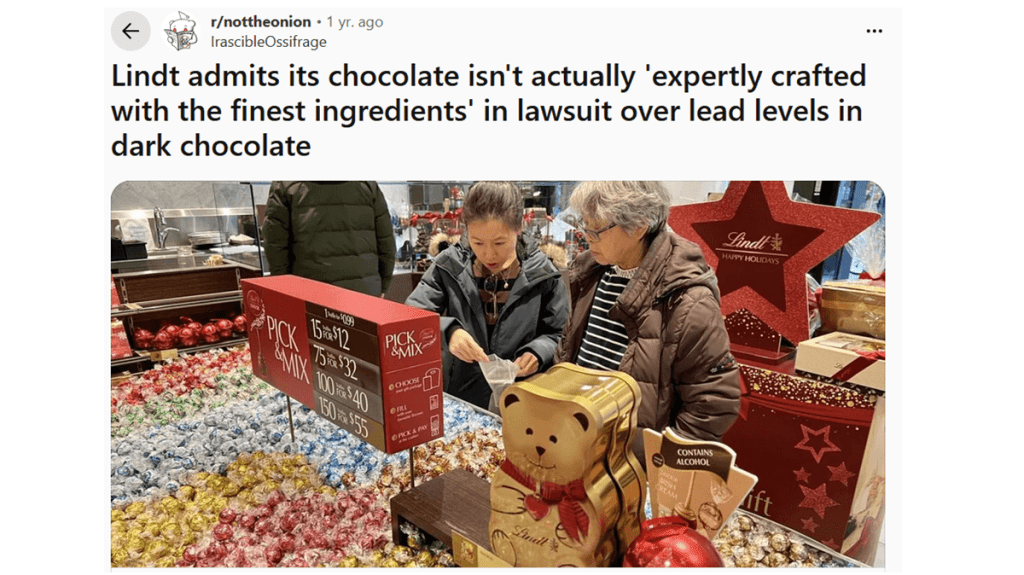
There’s a reason why the big confectioners spend a lot on advertising – to create a sense of nostalgia about a brand (Ah, Cadbury! Jumpers for goalposts…) and gain a little loyalty from consumers (Ah, Lindt! Swiss craftsmanship…).
There’s no doubt that advertising works – why else would companies spend so much on it? All companies have to decide how much to invest in marketing versus product quality (ingredients, manufacturing, etc.). Lindt has clearly spent a lot on advertising, based on the number of ads I’ve seen, whereas I’ve never seen an ad for Divine chocolate. It’s true in general that the most ethical chocolate brands tend to be small companies that rarely advertise.
On product packaging, Divine emphasizes the ethical aspects of the company (fair trade ingredients, certified B Corp, FSC-certified packaging) while Lindt talks about being expertly crafted, featuring the usual chef with his metal bowl.
Another way that larger brands maintain market dominance, which I mention in my book-in-progress, is to have cozy relationships with the largest retailers. Here’s a quote from my book:
A case study on Divine points out how hard it can be to get new, small brands onto supermarket shelves – for one thing, retail buyers don’t want to risk losing annual bonuses from the major multinational suppliers. One large wholesaler acknowledged that he would not stock Divine chocolate because he had ‘too much to lose in annual bonus payments.’ – Climactic
Thankfully, things are changing in that ethical chocolate makers are getting better at reaching consumers. About 15 years ago I grew to love good dark chocolate bars from companies like Equal Exchange and Alter Eco. But, like most people, I also crave chocolate bars that contain enjoyable components like caramel, biscuit, and nuts. Ethical chocolate makers have since caught on and now make more bars with tasty twists – just like this Divine hazelnut truffle bar.
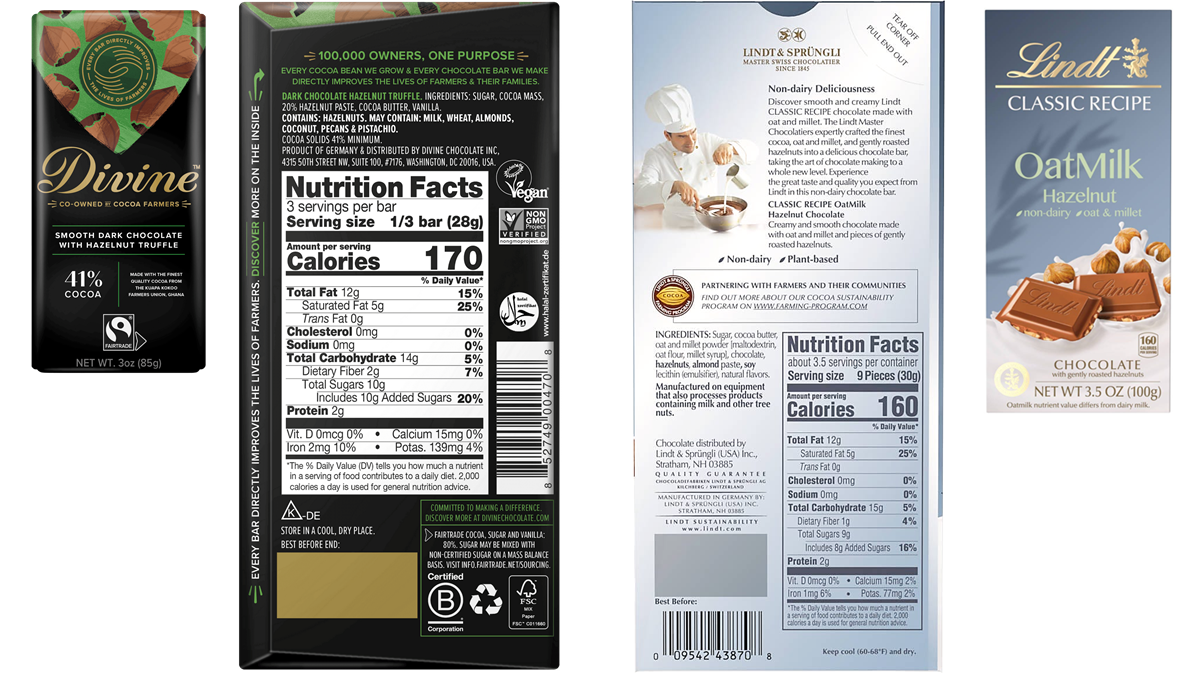
Lindt and Divine vegan hazelnut bars – ingredients and nutrition facts
The Nutrition Facts panels (above) for these two chocolate bars suggests that they might be similar – they are roughly equivalent in terms of calories, fat, carbs, and protein. It’s only in the details that we can spot the major difference – the Divine bar has roughly twice as much iron and fiber, because it contains much more chocolate. Cocoa is the second largest ingredient in the Divine bar while it’s the fourth ingredient in the Lindt bar.
Divine Ingredients: Sugar, cocoa mass, 20% hazelnut paste, cocoa butter, vanilla
Lindt Ingredients: Sugar, cocoa butter, oat and millet powder [maltodextrin, oat flour, millet syrup], chocolate, hazelnuts, almond paste, soy lecithin (emulsifier), natural flavors.
These differences help shed some light on why the Divine bar tastes better – appealing ingredients and more of what the bar is supposed to be about – chocolate and hazelnuts.
Ethical rating for Divine and Lindt chocolate
The story of Divine chocolate – the first farmer-owned Fairtrade chocolate company – is fairly well known. The company has been the topic of many studies examining whether fair trade is effective (spoiler: it generally is). Divine deserves to be on the GSP list of the top 10 ethical chocolate brands.
While Divine is backed up by third party certifications (Fairtrade, B Corp, FSC), Lindt emphasizes its own cocoa sustainability program. In-house programs that promise ethical sourcing can be misleading to consumers, especially when they come with a logo on packaging that makes it look like a third-party certification. That applies whether it’s Lindt’s Cocoa Farming Program, Mondelez’s Cocoa Life, Nestlé’s Cocoa Plan or Hershey’s Cocoa For Good.
Rather than including a full review of Divine and Lindt here, I’ll refer you to some other opinions for a change.
Ethical Consumer attracted attention in 2023 with a report on chocolate makers, finding that most of the chocolate that we buy (including Lindt) is below-average, ethically, while Divine is one of the best picks.
Ferrero, Lindt, Mars, Mondelēz [which includes Cadbury] and Nestlé dominate the UK chocolate market, accounting for just over half of chocolate sold in the UK. These are the same five companies that fall into the “poor” section of the scoretable, all scoring under 25/100 overall. – Ethical Consumer
Brands that scored 80-100 on Ethical Consumer for their cocoa sourcing include Divine and Vego (Vego also makes delicious vegan hazelnut chocolate bars). Here are opinions from a few other guides:
The Good Shopping Guide recommends Divine (82/100) but not Lindt (40/100).
Australia’s Shop Ethical hasn’t covered Divine and gives Lindt a D grade (not recommended).
Slave Free Chocolate recommends Divine but not Lindt.
The bottom line is that Divine is widely considered to be substantially more ethical than Lindt.
For me, it’s fascinating that the Divine bar also tastes so much better than Lindt’s – when you put it all together you wonder why anyone chooses Lindt. And we’re back to advertising!
I’ll wrap this up with a summary of my ratings for these two hazelnut chocolate bars.
Lindt Oatmilk Hazelnut:
A chocolate bar that rates poorly for ethics and is also just bland and unremarkable. It might seem okay at first but then when you compare it to a bar like Divine’s you realize how much it misses on both flavor and texture.
- 2 gold stars for quality and value.
- 1.5 Green Stars for social and environmental impact.
Divine Hazelnut Truffle:
Divine is at the other end of the scale in terms of both ethics and quality. I love hazelnut chocolate and this is one of the better ones that I’ve tried. The combination of sweet hazelnut truffle with dark chocolate makes it stand out.
- 4.5 gold stars for quality and value.
- 5 Green Stars for social and environmental impact.
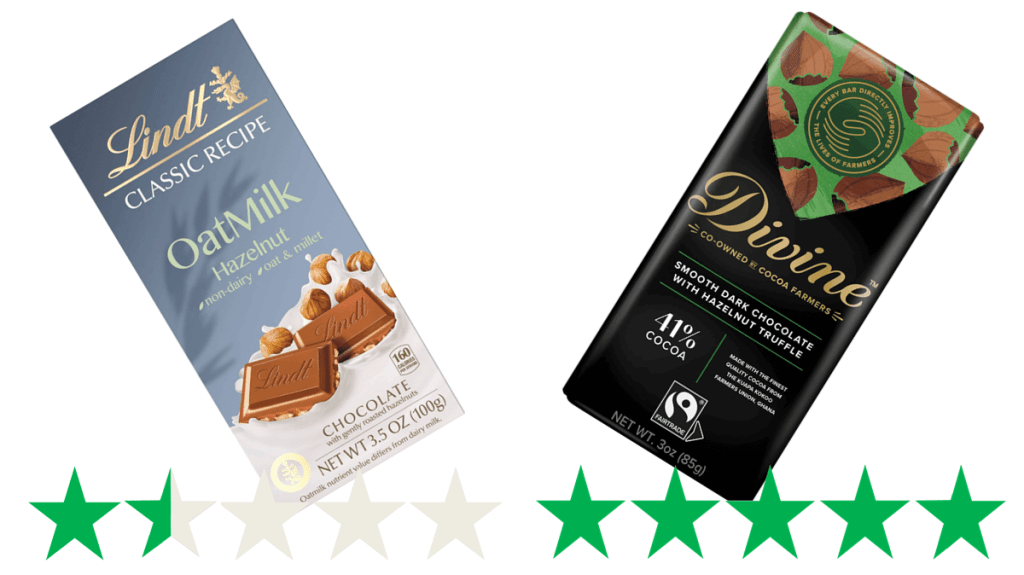
Approximate ethical ratings for hazelnut chocolate bars from Lindt (1.5 Green Stars) and Divine (5 Green Stars).
What do you think? Comment below with your rating if you like!
Join the Green Stars Project!
Include a Green Stars rating when you review a product or business.
Check out sister site The Green Stars Project for a wider discussion on ethical consumption and social/environmental issues. Here are a couple of relevant articles:
Top 10 Ethical Chocolate Brands (Please join in and vote!)

 Grocery Outlet Ethical Bargains
Leave a comment