
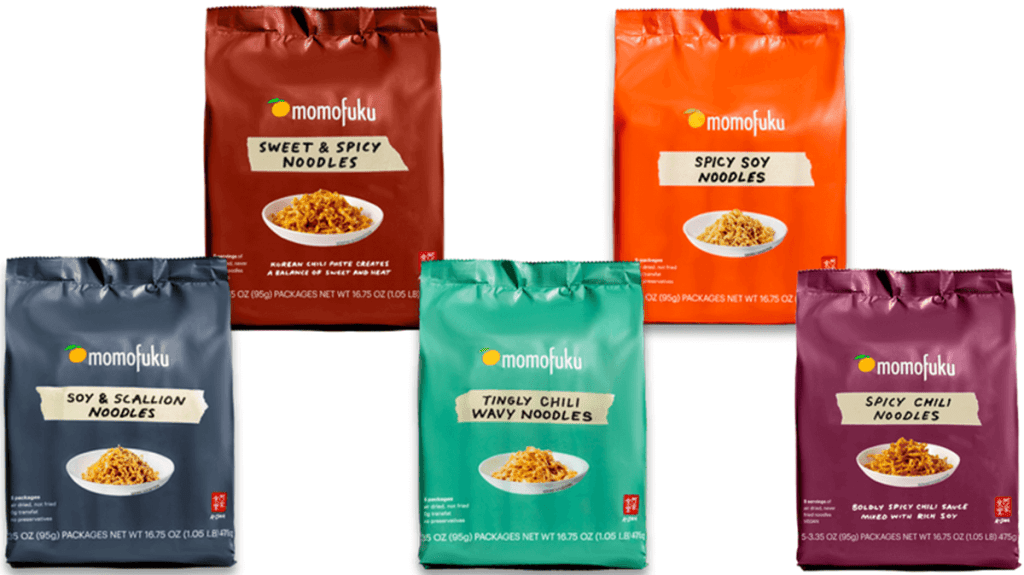
You can pick up most varieties of trendy Momofuku noodles real cheap at the Grocery Outlet. I saw them listed on the app for $2.99 and thought, Oh, same as the normal retail price, but sure I’ll try one. When I got to the Grocery Outlet, however, I found that it was $2.99 for a package of five! Then, I went back a week later and found them to be on a BOGO flash sale (buy one, get one free) – $2.99 for ten packs of noodles – one tenth of the normal price!! This must have made some students (Ahem, foodie students!) very excited. The exclamation points are for you.
To be honest, I was a little excited too – noodles from a famous Michelin star chef! From New York City!! 90% off!!!
Chef David Chang has built a food empire, which started with his 2004 launch of Momofuku Noodle Bar in New York City. Chang debuted what has become his most critically acclaimed restaurant concept, Momofuku Ko, in 2008 [scoring two Michelin stars]. – Tasting Table
But also, I figured it would be a useful experiment to evaluate the social and environmental impact of “instant” noodles. I want to include as many lifestyles as possible (within reason!) in my coverage of ethical consumption.

For all of that, I’m not really a fan of instant noodles. Well, that’s not exactly true – I like instant noodles in the same way as I like donuts. I could happily eat them, but my self-preservation instinct saves me from making a habit of them. That’s certainly true of the noodles of my student days – the infamous Super Noodles that dominated the UK/Irish market. As far as I remember, they weren’t just high in sodium and MSG but, weirdly, also loaded with fat (I’ll come back to that).
As discussed on r/BritishProblems, trying out Super Noodles 15 years later is sure to lead to disappointment (and, somehow, a realization that Jamie Oliver has ruined everything). But the Momofuku noodles that I’ve been eating this week are different. Okay, they do look the similar to Super Noodles at first glance, but that’s by design. The same convenient format but an elevated experience, is probably how the marketing team puts it. A bit like Thomas Keller’s elevated HoHo (a mini Swiss Roll from the same people that brought us the Twinkie), which he named the Oh Oh.
Are Momofuku instant noodles any good?
Yeah, they’re fine! LOL. No, it has to be said that they’re way better in terms of texture, compared to slimy, oily Super Noodles. And they’re incredibly convenient – long shelf life, minimal preparation, minimal dish washing, no cooking skill required. Having said that, the noodles are definitely better if you put some effort into cooking veggies to go with them.
I’ve had them with various toppings, from a handful of peanuts to a fully-seasoned stir-fry. My favorite addition so far is simply veggies (e.g., shallot, peppers, zucchini, asparagus, habanero, garlic) that have been sautéed in oil with no additional seasoning – no salt, no stock, no soy sauce. This works well since the Momofuku noodles are already fully-loaded with sodium. Plus, they have flavor profiles designed by Michelin star chef, David Chang in New York City. So don’t you dare mess with his flavors! You think you’re better than New York?!
But really, the noodles aren’t very spicy at all, which makes sense as it’s easy to modify them with habanero, fresh garlic, etc., for heat and flavor. Now that I double check, I haven’t yet tried the spiciest variety, Spicy Chili, but I’ve had the other four varieties and though they were all tasty. If I were to pick a favorite, it would be the Sweet & Spicy, which is nicely balanced (not sweet) and comes with the medium-width noodles.
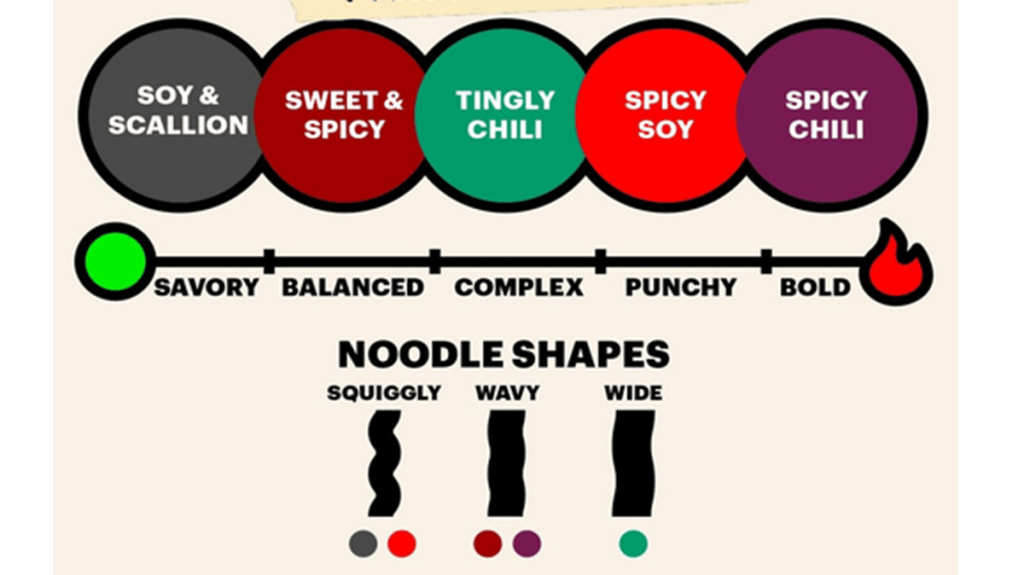
There are three different noodle shapes ranging from skinny, like fettucine, to wide, like tagliatelle.
- Soy & Scallion and Spicy Soy use a skinny, squiggly noodle.
- Sweet & Spicy and Spicy Chili use wavy medium-width noodles.
- Tingly Chili use the widest shape (like tagliatelle)
Nutritionally speaking, the Momofuku noodles aren’t bad, especially if you just think of them as a carb to serve alongside some veggies and maybe tofu.
Momofuku noodles – ingredients and nutrition facts
The noodles do actually contain protein – 11 grams per serving, which is a decent amount. If you add peanuts or tofu then you’re easily up to 20 grams. They have a much better nutritional profile compared to regular instant noodles which are actually prepared by deep frying! What?! That’s why there’s so much fat in Super Noodles and many other brands of instant noodles: they are deep fried in palm oil, which is disturbing in at least three different ways!
Momofuku noodles are made by A-Sha
Momofuku noodles are air-dried instead of deep-fried, resulting in a product that’s virtually fat-free and has twice the protein content of regular instant noodles. They’re actually made by A-Sha – a Taiwan-based company (with US HQ in California) that specializes in air-dried noodles. A-Sha has a good reputation and is maybe at the forefront of the healthy instant noodle trend, especially if you include collaborations like Momofuku.
The noodles are made from just three ingredients – flour, water, and salt. Of course, the Momofuku sauce does contain a little fat in the form of sesame oil, etc., and also adds a fair amount of sodium – around 50% of your daily allowance for most Momofuku varieties. If you’re concerned about this you could always regulate the amount of sauce that you add to your noodles. Or do what I do and add veggies that have not been seasoned. And don’t make a habit of them!

Can instant noodles be part of an ethical diet?
I’ve written before about the benefits of pasta (especially high-protein varieties) from an ethical perspective – check out the reviews of Explore Cuisine (4.5/5 Green Stars) and Chickapea pasta (5/5 Green Stars), for example.
As far as processed food goes, pasta is one of the most sustainable options that you can find. It’s a shelf-stable, nutrient-dense, lightweight product that can be packaged in a basic cardboard box. – Review of Explore Cuisine
They were both high-protein pastas, made from legumes (organic chickpeas, lentils and soybeans) and packaged in cardboard boxes. At the other end of the scale are the nutritionally-deficient noodles that are deep-fried in palm oil and/or packaged in unwieldy plastic cups and bowls. The Momofuku noodles lie somewhere in the middle, for reasons that I’ll explain below.
Pasta such as the high-protein examples above are a great addition to an ethical diet, especially when responsibly sourced and packaged. Some brands of instant noodles are a poor choice (e.g., when fried in palm oil) but can also be a reasonable addition to an ethical diet, in moderation, if they’re done right.
Ethical rating for Momofuku noodles
I’m rating Momofuku noodles 3.5/5 Green Stars for social and environmental impact, based on the following:
- Momofuku noodles are all vegan. Adopting a plant-based diet is the top thing you can do to mitigate climate change, deforestation, animal cruelty, and food scarcity.
- The main components, wheat and soy are two of the most sustainable ingredients to make our food from. See the GSP post on the environmental footprints of meat and other foods for more detail on that.
- Dried products such as noodles can help reduce food waste, thanks to their long shelf lives. Also, they do not require refrigeration during transportation and sale (refrigerants contribute to climate change).
- Would be nice to see organic wheat and soy used. But the noodle maker A-Sha is becoming non-GMO certified. This matters to me not because of the genetics but because GMO crops are more likely to be grown from seeds coated with neonics and other pesticides.
- The protein content of the wheat is preserved in the air-drying process so these noodles do contribute something, nutritionally – mainly protein and fiber – while being low in fat and sugars.
- Importantly, the air-drying process avoids having to deep-fry noodles in oil, often palm oil.
- Let’s consider the packaging by simply evaluating it on a weight basis. The weight of packaging from three packs of Momofuku noodles is about the same as one medium-sized potato chips bag. Considering that this amount of plastic is for 3 meals, it’s not terrible (I’ll revisit that topic).
- Neither A-Sha nor Momofuku have a lot of information about the company’s impact but both founders seem motivated to improve our food systems, including taking it in a more sustainable direction.
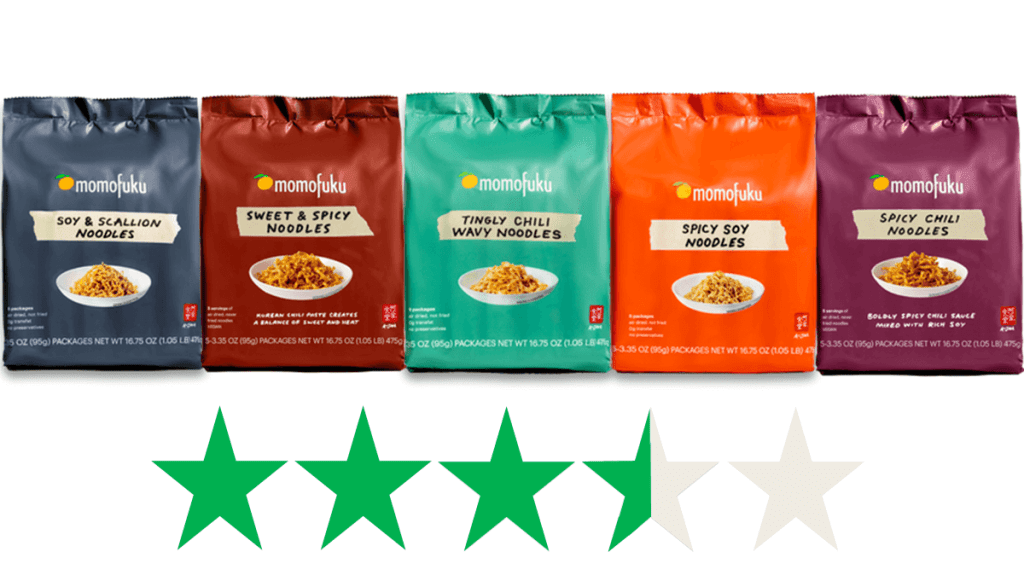
Summary scores (out of 5) for Momofuku noodles:
- 4 gold stars for quality and value (certainly at Grocery Outlet prices)
- 3.5 Green Stars for social and environmental impact.
What do you think? Comment below with your rating if you like!
Join the Green Stars Project!
Check out sister site The Green Stars Project for a wider discussion on ethical consumption and social/environmental issues. To find out more about the movement, check out these articles on the GSP site:
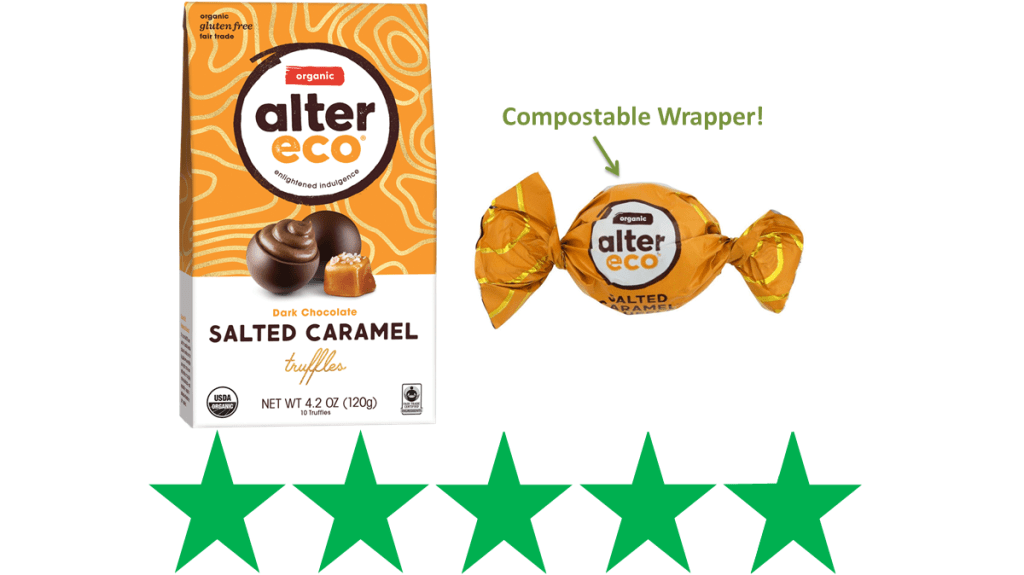
 Grocery Outlet Ethical Bargains
Leave a comment