
Chickapea pasta is available at the Grocery Outlet – I bought a box of spirals and, having scoffed them pretty quickly, picked up lasagna sheets on my next visit (both were $2.99). Chickapea is one of several brands of high-protein pasta that I’ve tried out over the years, and I highly recommend trying some, yourself. Here’s why:
You’re probably unlikely to think of pasta as a substitute for animal-based products. However, there has been a trend of nutrient-dense pastas that fit the bill because they are made from legumes such as lentils, edamame, mung beans, adzuki beans, or chickpeas and some also contain superfoods like spirulina or quinoa. Besides being high in protein, these pastas are typically also rich in fiber, vitamins, folic acid, and essential minerals such as iron.
If you’re looking for an ideal plant-based processed food from an environmental standpoint, legume pasta is up there among the best options. This is not just because legumes are among the most sustainable and nutritionally dense foods but also because pasta is a dried product, has a long shelf life, doesn’t require refrigeration, is cheap to ship, and can be packaged in a simple cardboard box.
Basically, high-protein pasta is one of the best shelf-stable replacements of meat that you’ll find in the grocery store.

Cooking high protein pasta such a Chickapea
It’s easy to cook up a complete meal with one of these pastas because they provide both protein and complex carbs, requiring just a fresh veggie component to complete the dish. Even served with pesto or tomato sauce, they can satisfyingly replace a meat-based meal. My favorite addition is sautéed mushroom and garlic.
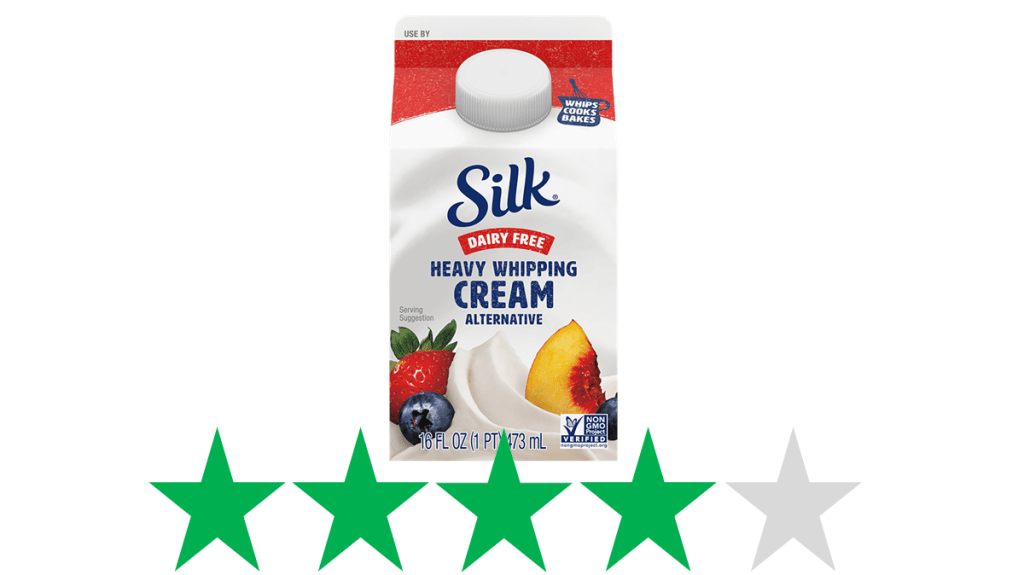
Typically I’ll cook the pasta in generously salted water and sample it after around 7 minutes to make sure I catch it at the al dente phase. While it’s cooking, I’ll sauté some mushrooms and garlic in olive oil and then season with salt and pepper, which helps release a little liquid from the mushrooms. Drain the pasta and rinse briefly in cold water – I do think this improves the texture of the pasta, removing any excess starch that might make it feel a bit grainy. Toss the pasta with the mushrooms and garlic, adding a little veggie stock if needed (or vegan cream such as the Silk heavy cream that I reviewed recently).
Chickapea spirals: ingredients and nutrition facts
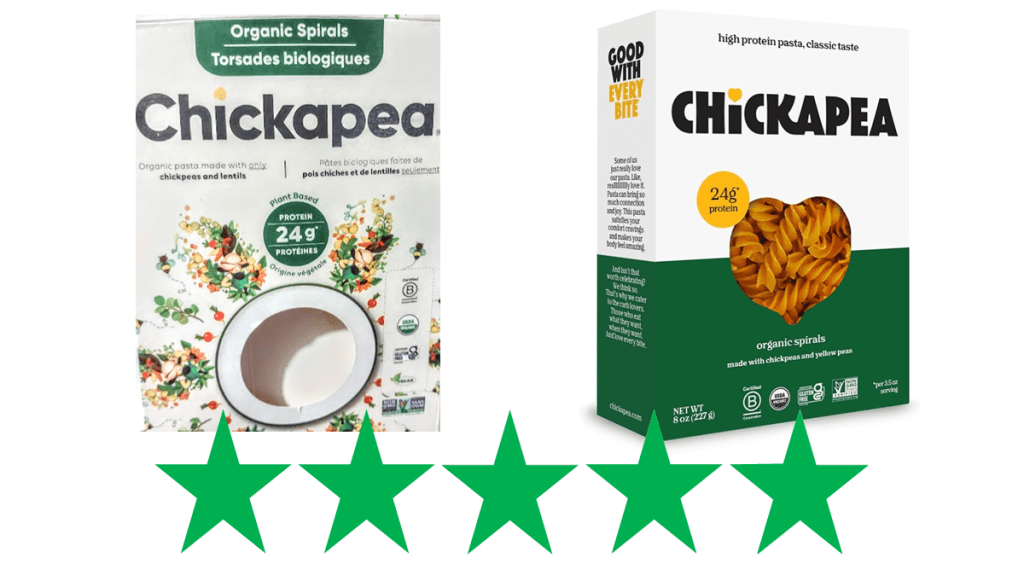
This is where it’s a little complex – there are several versions of Chickapea pasta as the recipe has been tweaked over time. The version that I bought at the Grocery Outlet is made from chickpeas and lentils, while the newer version is made with yellow peas and chickpeas. It seems that the older chickpea & lentil version had a strong following, so fans of this should seek it out at the Grocery Outlet (on sale!) while stocks last.
(By the way, Ethical Bargains doesn’t receive any funding from anyone, in case you’re wondering! I’m just trying to help readers find ethical products at reasonable prices and to adopt plant-based diets.)
Ingredients: organic chickpea flour, organic yellow lentil flour, organic red lentil flour.
Nutrition Facts are shown below. Looks like the product I bought might have been intended for the European market as the nutrition facts are stated per 100 g instead of the usual per serving that you’ll find on US or Canadian packaging.
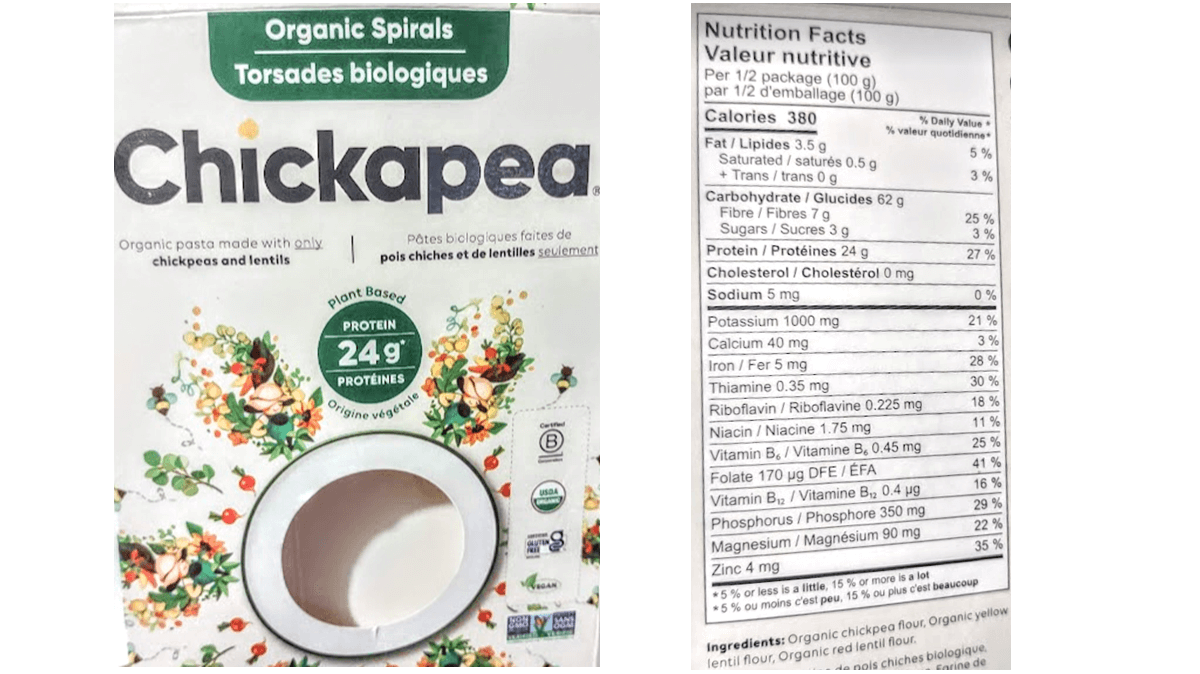
In any case, you can see that the pasta contains 24 g protein per 100 g – 24% protein content is on par with chicken or beef. It’s also very rich in minerals (iron, potassium, magnesium, and phosphorus), B vitamins and folate. It’s also 7% fiber, something that you don’t find in meat but that’s essential for maintaining a healthy gut microflora.
Try legume-based pasta!
Based on the brands that I’ve tried, I highly recommend that you try out whatever legume-based pasta that you can find in your area. I was surprised to find that friends in Ireland had never heard of high-protein pasta – perhaps it’s not as common in Europe yet. You can certainly find it online, however, and since it’s lightweight and requires no refrigeration it’s one of the lower-impact items to have shipped to your home. Online retailer, Vitacost, which I like because it tends to stock ethical products and usually ships them in paper/cardboard packaging, stocks several brands of high-protein, legume-based pasta. Another brand that I’ve covered here on Ethical Brands is Explore Cuisine, some of which are extremely high in protein – 43%!
Ethical rating for Chickapea pasta
I’m rating Chickapea pasta 5/5 Green Stars for social and environmental impact for these reasons:
- It’s vegan product that delivers lots of protein, providing a convenient alternative to meat-based dishes. Adopting a plant-based diet is the top thing you can do to mitigate climate change, deforestation, animal cruelty, and food scarcity.
- Chickapea pasta is made from legumes (even as the recipes change they are all legumes – chickpeas, lentils, yellow peas) which are the most sustainable way to provide protein for the human population. Legumes fix their own nitrogen from the air (reducing the need for nitrogen fertilizer) and help to regenerate the soil.
- The ingredients are also certified organic, another important way to support healthy soil systems and avoid pesticide use.
- As far as processed food goes, pasta is one of the most sustainable options that you can find. It’s a shelf-stable, nutrient-dense product that’s lightweight because it contains very little water (it absorbs the water that you provide during cooking) and can be packaged in a basic cardboard box.
- Chickapea is a certified B Corp with a score of 121.
- It’s also a women-owned and led business. Founder Shelby Taylor has maintained the company’s integrity.
- The company partners with local food banks and supports paid volunteer time.
- The company publishes an impact report. It would be good to see an update but in the meantime, here’s one detail from the 2021 report: Chickapea donates over $130k each year to Community Food Centres Canada (CFCC) which buys organic produce from The New Farm to distribute across low-income communities. The New Farm is a Canadian organic farm that practices and studies regenerative agriculture.
- On its LinkedIn page, Chickapea provides an update on donations: “Chickapea is committed to donating 2% of revenue — not just profits— annually to provide nutritious meals to those in need while also supporting regenerative agriculture to help mitigate climate change.” 2% of revenue is a good amount compared to average corporate donations – compare it to Kind bars, for example.
Here’s an interview with Chickapea founder and CEO, Shelby Taylor for more on her story and outlook:
Summary scores (out of 5) for Chickapea pasta:
4.5 gold stars for quality and value.
5 Green Stars for social and environmental impact
If you have a different opinion, please share your rating as a comment below.
Join the movement (and win a prize!) by including a Green Stars rating whenever you write a product or company review and let me know if you do.
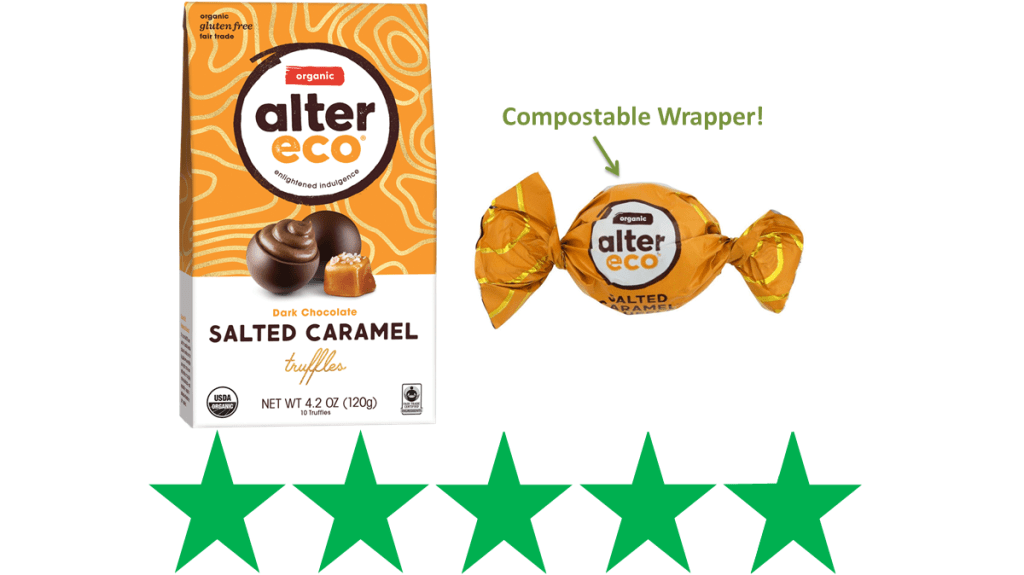
 Grocery Outlet Ethical Bargains
Leave a comment