

The fall Grocery Outlet wine sale is coming up! It runs from Nov 6-12, 2024 and those with the app will get early access, so watch out for that. All wines will be reduced an additional 20% on top of the already discounted prices.

My picks for the sale, as usual, start out by looking at my favorite finds over the last few months. Some may not be available, so here’s a longer list of six that were memorable:
- Grant Burge, The Holy Trinity, GSM, Barossa, Australia, 2018. $9.99
- Mon Frère, cabernet sauvignon, California, 2021. $5.99
- Sabotage, cabernet sauvignon, Napa, California, 2018. $9.99
- Domaine de Beaumefort, Côtes du Rhône Villages, 2022. $8.99
- Post House Road, cab sauv, Livermore Valley, California, 2021. $8.99
- St. Hallett, Blackwell Shiraz, Barossa, Australia, 2018. $6.99
During the sale, all wines will be 20% off the prices listed above. Of all of them, I think you should have no trouble finding Mon Frère (which will be $4.79 during the sale) while The Holy Trinity (which scores 4.1 on Vivino) may be the hardest to find. It just depends on which Grocery Outlet you go to. If you download the app you can see some of the wine inventory for each store in advance, perhaps saving you a trip. The app will also grant you early access to the sale.

Are the Australian wines ethical purchases?
I wish I could tell you some heartwarming stories about some of these wines, but actually they don’t have much to say about themselves. The two Australian wineries, for example, are owned (along with many other large wineries, including Hardy’s) by Accolade Wines, which is in turn owned by The Carlyle Group. Now, I’m not against buying ethical brands that are owned by heatless multinational companies – if the brand is actually ethical. However, the websites for Grant Burge and St. Hallett wineries are like carbon copies of each other, with nothing to say about sustainability. That’s one strike against Grant Burge and St. Hallett.
Is importing all the way from Australia a second strike against them? Well, in a previous post on French winemaker Gérard Bertrand I decided that it can be worthwhile to support a sustainable winery even when located on a different continent. The carbon footprint of transporting items by ship without refrigeration (e.g., wine or bananas) usually constitutes a small portion of a product’s overall carbon footprint. So the distance wouldn’t put me off too much if it was a sustainable product, but the Barossa region that the two Australian wines come from has been increasingly drought-stricken in recent years. (See my post on Cardella Winery, located in California’s dry San Joaquin Valley for more on water use in the wine industry.)
Should we be encouraging wine production to support an export market from a state experiencing water shortages? Unfortunately the two Australian wineries provide no information on environmental impacts such as water use, but we know that the Barossa valley is one of the most arid regions in the winemaking world. Coupled with that, their ownership by the massive US-based multinational Carlyle Group means that we are not even really supporting Australian businesses. So, all things considered, I’m striking the two Australian wines from my list and will search out something new instead for the sale.
How to think about ethical research
In the example above, I bought the wines above first and then thought about the decision (from an ethical perspective) afterwards. This is not perfect but I think it’s an acceptable way to do things – certainly better than never considering the social or environmental impact. It already takes me quite a while to do my shopping but I could be standing in the aisle all day if researching every prospective purchase in detail. So I think it’s a reasonable approach to buy an item once, then research it online and learn from the experience. If the ethics don’t vibe with you then just don’t buy it again. It’s an effective way to build a foundation in ethical consumption.
Of course, it’s even better to make informed decisions in the first place. There are things that I’ll generally look for in advance, such as certifications, and also some things that I’ll generally avoid, such as commodity market palm oil. But with wine, it’s a bit trickier knowing which might be sustainable and which are not. So perhaps a good first step is to buy a wine that you think you’ll love and drink sparingly, rather than wine that’s drunk in volumes just as a means of ingesting alcohol. In the latter case, a bottle of vodka is probably a more sustainable and economical choice than wine.
What I’ll actually buy in the upcoming GO wine sale
I’ll skip the Australian wines, I already have a backup bottle of Mon Frère, so I’ll probably pick up another Domaine de Beaumefort (Côtes du Rhône Villages) and then look for something new. The wine sale is a good opportunity to take a gamble on something a bit pricier that you may not have otherwise tried. I’ll probably try the Vieux Clocher Châteauneuf-du-Pape, pictured below. At least this winery (Arnoux & Fils) is still independent and engages in organic agriculture for some wines.

While shopping for your wine, here are some other items that you may enjoy:
Nuts for Cheese – a vegan cheese that’s actually pretty tasty. I rated Nuts for Cheese 4.5/5 Green Stars for social and environmental impact.
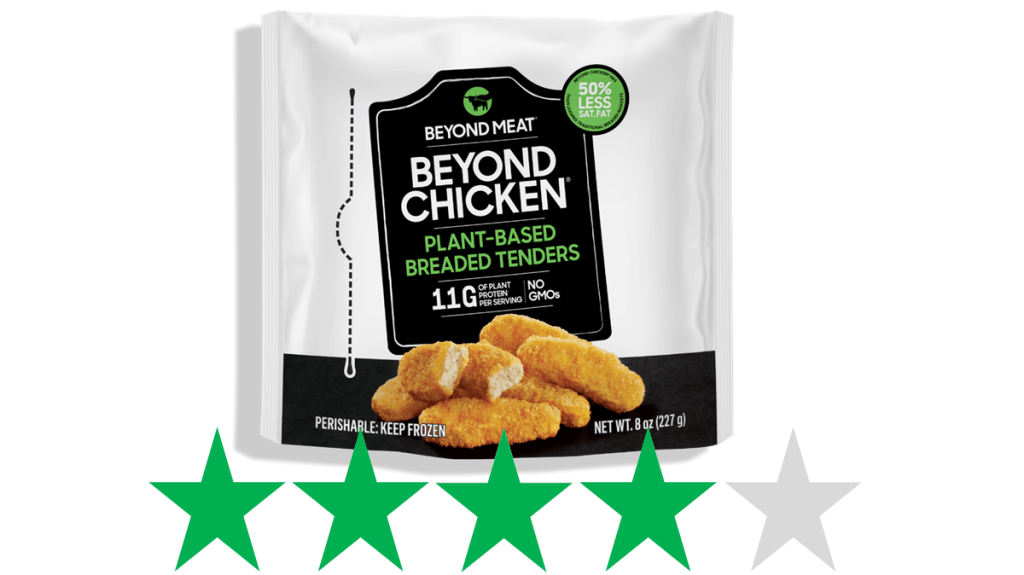
Beyond Meat breakfast sausages and patties – nice breakfast fare with minimal packaging that also deserves 4.5/5 Green Stars.
This blog, Ethical Bargains features products that I’ve bought on discount at the Grocery Outlet – particularly ethical products. I will rate products on a scale of 0-5 Green Stars for social and environmental impact – see the Green Stars Project for more details on this idea. In the process of evaluating products purchased at the Grocery Outlet we will explore topics related to ethical consumption: climate change, equality, poverty, sustainable agriculture, etc.


 Grocery Outlet Ethical Bargains
Leave a comment