

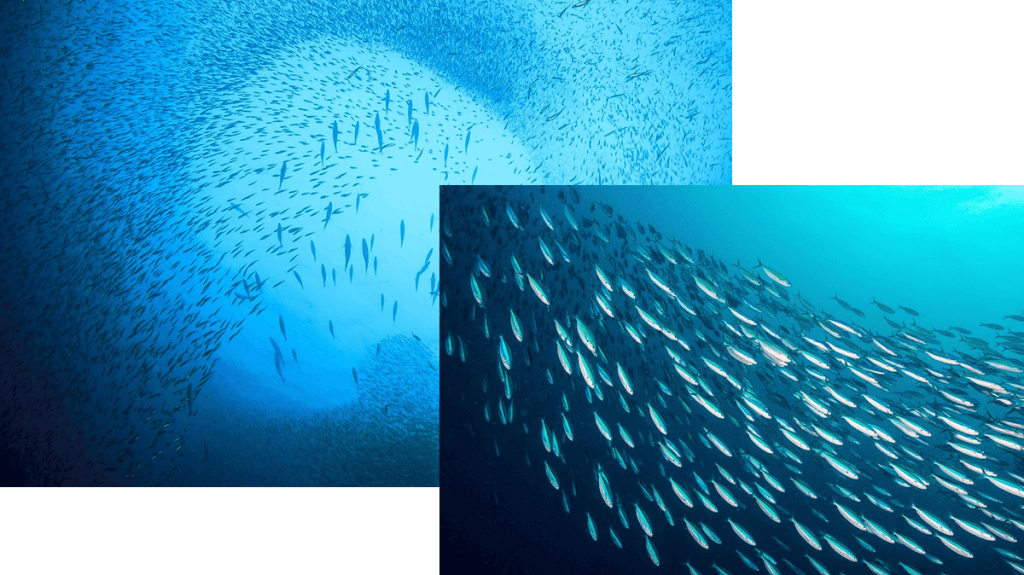
Season sardines (in water, no salt added) are available from the Grocery Outlet for a mere $1.29 per can, compared to a normal price of around $2.30 (Vitacost) or $3 (Amazon). The fact that the sardines are in water and have no added salt is important since I’m feeding these to my cat (I’m vegetarian, myself). There are many questions to answer here but first off, what are sardines, exactly, and how do they differ from herring (if you’re Swedish) or kippers (if you’re English)?
A herring is an older and bigger sardine, eaten either pickled and fermented or raw. A kipper is a whole herring that has been lightly smoked and split into a butterfly cut. Finally, a sprat is a sardine that is smoked for about 3 hours. There are over 20 different species of “sardine”. – Season FAQs.
Maybe the next important question is this one:
Is it recommended to feed fish to your cat?
It’s generally considered to be fine to feed fish to your cat with the exceptions of raw fish, fish containing large bones, and fish canned in brine (of course, you can drain the brine and rinse the fish in this case). So, it’s best to choose fish that’s cooked and preserved in plain water or perhaps a vegetable broth. Common advice is to think of fish as a treat, alongside a food formulated for cats, rather than as an exclusive diet. However, it’s also true that feeding oily fish that are rich in omega-3 fatty acids, such as sardines or tuna, are likely to offer benefits in boosting your cat’s immune system and nervous system.
Season sardines – ingredients and nutrition facts
Season sardines – ingredients: Sardines, water

Season states that sardines packed in oil or water have a 5 to 7 year shelf life while those packed in sauces have approximately a 3 to 5 year shelf life. This is good news for those who are not so good at managing their pantries – the long shelf life helps avoid food waste. The can I just opened has an expiration date of Dec 31, 2026.
How sustainable are sardines?
There is rarely a simple answer to a question about sustainability of fish but here are some general points on the topic:
- For broad environmental impact, seafood is generally more sustainable that meat – see these two seminal papers for more details. (Fish have much smaller environmental footprints than beef or lamb and also smaller than, or in the same ballpark as, chicken, depending on the variety).
- As some kinds of fish are much better than others, you need to do some research to figure out which ones to avoid. In July, I was excited to profile some well-liked vegan breaded shrimp because (America’s favorite seafood) real shrimp can be so problematic, whether farmed or trawled from the ocean floor.
- This article (based on recent research) touting the low carbon footprints of canned sardines and anchovies prompted me to buy sardines for my cat in the first place.
- It’s not all about the carbon footprint, of course. We need to be conscious of overfishing of the target fish and also the impact on other marine species. Seafood such as shrimp that’s traditionally fished by bottom trawling has a large bycatch of other species (including turtles). Sardines are less prone to bycatch problems but can still be overfished. Because so many other creatures depend on smaller “forage” fish for food (including whales and seabirds) they can have a large impact on ecosystems if depleted.
- A certification can help reassure consumers that certain criteria have been met, regarding overfishing and bycatch issues.
The bycatch of anchovy and sardine fisheries is relatively low and their efficiency is relatively high, with relatively low GHG emissions per landed weight, both of which result from the schooling behavior of the fishes and the purse seine fisheries that target them. – Climate, Anvchovy, Sardine (Annual Review of Marine Science, 2017).

Season sardines are certified by Friend of the Sea
The package of Season sardines has a small Friend of the Sea logo, with a graphic of a boat on water surrounded by a red ring. Because I don’t eat fish, I wasn’t really aware of this certification, so I have my cat to thank for introducing me! Friend of the Sea was started in 2008 by Dr. Paulo Bray, who had previously founded the Dolphin-Safe project. I’m going to cover seafood certifications and sustainability guides in a separate post as there’s too much to cover here. I’ll just qucikly mention one paper that examined fisheries certified by both Friend of the Sea and the larger Marine Stewardship Council (MSC), concluding that:
It is still reasonable to buy certified seafood, because the percentage of moderately exploited, healthy stocks is 3–4 times higher in certified than in non-certified seafood.” – Marine Policy, 2012.
Season Brand sardines are Friend of the Sea certified while its kippers are certified by the Marine Stewardship Council (MSC).
The Season sardines are caught off the coast of Morocco, which is considered to be one of the best regions to obtain them, based on current fish stock data. Seafood Watch now has a partial guide to sardines (longer report here) and generally classes sardines from the Morocco region as a Good Alternative (their medium rating). SeafoodWatch, based in the Monterey Bay Aquarium, is well aware of the story of sardines, as Monterey used to largely depend on sardine canning until fish stocks ran low. California’s Pacific ocean apparently ran low on sardines because of changes in the ocean temperature, more than from overfishing.
Commercial fishing was prohibited from 1967-1986, and the fishery re-opened in the 1990s after the population partially recovered. However, the fishery was closed again in 2015 when the population numbers dropped too low. It remains to be seen if and when the Pacific sardine fishery will open again. – SeafoodWatch blog.
Sustainable solutions for a cat food
I think it makes sense to think of sustainability of pet food in the same way as human food. That probably sounds obvious but it might be tempting to think along the lines of pet food being a byproduct of the meat/fish industries and therefore not really “counting” to the same extent as meat or fish sold for human consumption. However, it’s more accurate to think of it as a co-product,because it does contribute to the economics of those industries. Therefore cat food containing beef or lamb has a higher environmental footprint than cat food containing chicken or, better again, fish.
I do like the idea of feeding fish as a supplement to regular cat food – especially the more nutrient-dense fish (sardines, tuna, salmon; preferably certified). The research, mentioned above, on the carbon footprints of various kinds of seafood also factored in the nutrient density. The researchers concluded that:
The highest nutrient benefit at the lowest emissions is achieved by consuming wild-caught small pelagic* and salmonid species, and farmed bivalves like mussels and oysters.” – Bianchi et al., Nature, 2022.
*Small pelagic fish include sardines, anchovies, herring, and mackerel.
Again, it is important not to forget the other factors above, such as overfishing. Also, have your cat neutered!
Overall ratings for Season sardines
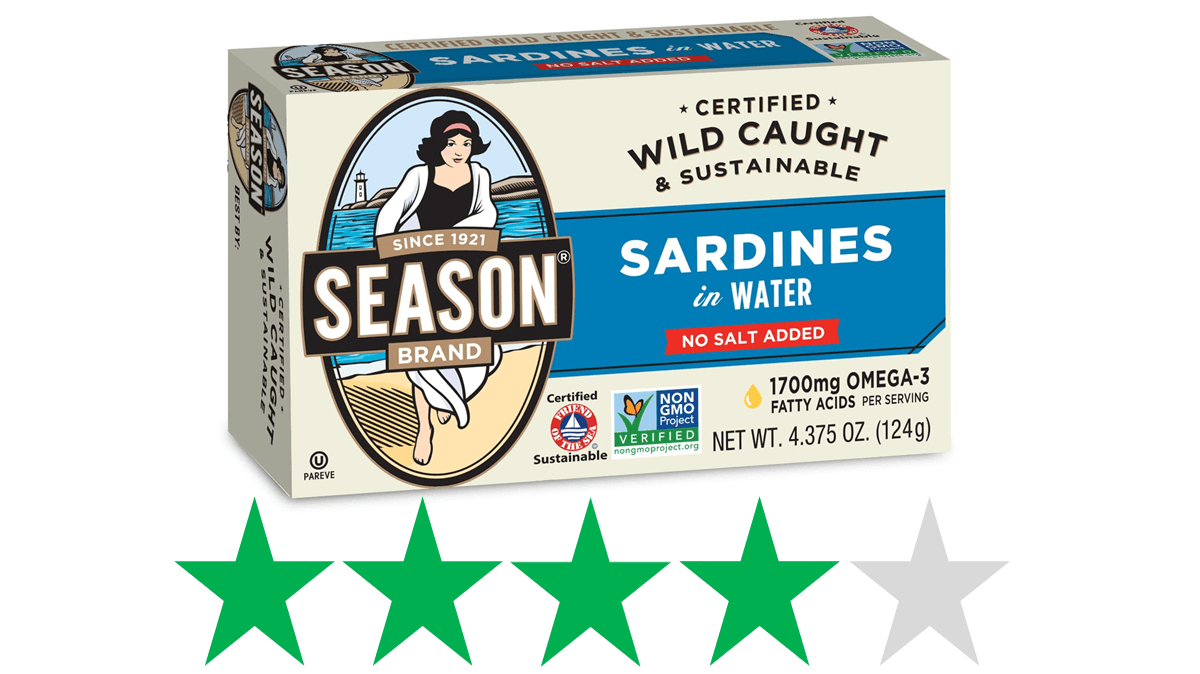
I’m scoring Season sardines 4/5 Green Stars for social and environmental impact, as a cat food*, for these reasons:
- As a cat food, small fish such as sardines are among the most sustainable options
- (The same applies for humans choosing between various meat and fish options!)
- It’s a nutrient-dense product (one or two sardines is enough for a meal) that has one of the lowest carbon footprints among fish. The carbon footprint of sardines is around 100-times smaller than that of beef!
- Packaging is a light aluminum can with no printing other than an expiration date, to make it more amenable for recycling (aluminum has among the highest recycling rates), and an outer cardboard box.
- The sardines come from one of the better fishing regions (off Morocco)
- It’s certified by Friend of the Sea, helping to protect against overfishing.
*This is a rating within the world of possible cat food options.
Is vegan cat food realistic?
On a final note, vegan cat food is gaining acceptance as an option. A study published in Sept 2023 found that the 129 people who fed their cat a vegan diet reported fewer vet visits and illnesses. The difference was not statistically significant but it indicates that a correctly-formulated vegan cat food (containing taurine, arginine, etc.) can work as well as meat-based cat food. This follows growing sentiments, including those of veterinarians and professors, that there’s no reason a plant-based cat food shouldn’t work.
The British Veterinary Association has previously warned against placing pets on alternative diets, but said that it was reviewing its advice. – The Guardian.
Commercial brands of vegan cat food are now available and I may try one out as part of a mix that includes fish-based food such as these sardines. Another topic for a future post!
My scores (out of 5) for Season sardines:
- 5 gold stars for quality and value
- 4 green stars for social and environmental impact
If you have a different opinion, please share your rating! Until next time, stay safe : )

 Grocery Outlet Ethical Bargains
Leave a comment